

Homeowners
What Homeowners Don’t Understand About HELOCs—and Why It Could Be Costing Them
December 26, 2025
A Home Equity Line of Credit (HELOC) is sort of like giving homeowners a checkbook linked directly to their home equity.
You don’t get a lump sum like a traditional loan. Instead, you’re approved for a borrowing limit, let’s say $100,000. And then you will be able to write checks for whatever amount you actually need as many times as you like up to your limit.
The kicker? You don’t pay interest on that full $100,000, only on the checks you write. Translation: if you only use $10,000, you pay interest on that while the other $90,000 simply sits there.
That flexibility is what makes a HELOC such a powerful financial tool. Yet many homeowners don’t realize this. And that misunderstanding can lead them to either avoid HELOCs altogether or use them in ways that backfire.
Here’s a closer look at the biggest misconceptions about HELOCs, how those myths can hurt you, and what to keep in mind if you’re considering using a HELOC.
Misunderstanding #1: A HELOC works like a second mortgage
Many homeowners assume a HELOC is like taking out a second mortgage: you get one lump sum, pay interest on the whole thing, and start repaying right away.
A HELOC is different. It’s a revolving line of credit, more like a credit card that’s tied to your home’s equity. You’re approved for a certain limit, but you don’t have to use it all at once. You can borrow only what you need, when you need it. And you only pay interest on the portion you draw.
Why this matters: Homeowners who misunderstand this often hesitate to open a HELOC, fearing they’ll be saddled with a massive new debt. But a HELOC can sit unused until you need it.
Misunderstanding #2: HELOC payments work like a fixed loan
Another common assumption about HELOCs is that once you draw on it, you’ll repay it just like a mortgage with the same payment every month, set for decades. That’s not how it generally works.
HELOCs generally have two phases:
- The draw period (often five to 10 years): You can borrow as needed, and most lenders require you to pay only the interest.
- The repayment period (often 10 to 20 years after that): The line closes, and you must start repaying both principal and interest.
That shift from interest-only to principal plus interest can mean a serious jump in monthly payments. For example, a homeowner paying $300 a month during the draw period might see payments spike to $700 or more once repayment kicks in.
Why this matters: “The biggest mistake I’ll see people make with a HELOC is failing to account for the repayment period,” said Martin Orefice, CEO of Georgia’s Rent to Own Atlanta. “When you first get a HELOC, it can be easy to get lulled into complacency by those low, interest-only payments.”
So, if you have a HELOC, plan ahead for the repayment phase. Make extra payments toward the principal during the draw period or refinance your HELOC before the higher payments begin.
Misunderstanding #3: HELOCs are just for emergencies
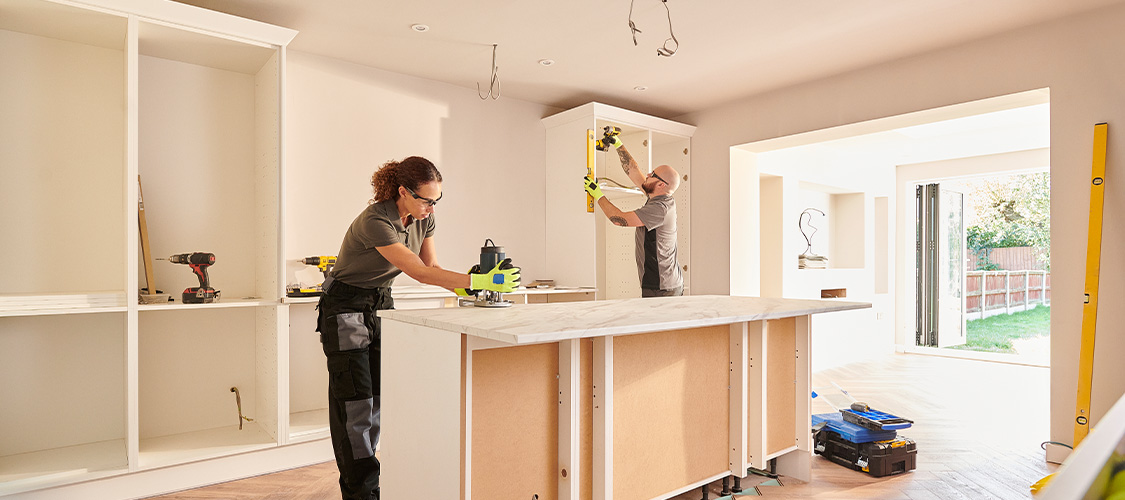
Since HELOCs function as a flexible line of credit, some homeowners treat them as “break glass in case of emergency” funds for medical bills, tuition, or other big expenses. While that’s certainly an option, using a HELOC strictly for emergencies overlooks one of its biggest benefits: low-cost borrowing.
HELOCs often carry interest rates much lower than credit cards or personal loans. That could make them a savvy way to fund home renovations that increase property value, consolidate higher-interest debt, or even cover a down payment on a second property.
Why this matters: If you only think of a HELOC as emergency money, you might miss out on using it for long-term financial growth.
Don’t be afraid to put your HELOC to work in ways that benefit your home’s value or your financial health. Just use it wisely. Investing in kitchen remodels which will increase your property values or debt payoff may make more sense than splurging on a vacation.
Misunderstanding #4: Forgetting that HELOCs have variable rates
Unlike fixed-rate mortgages, HELOCs typically carry variable interest rates tied to the prime rate. That means your interest costs can go up (or down) over time as rates change.
Plenty of homeowners learned this the hard way when rate hikes pushed HELOC interest into double digits. Borrowers who assumed their low introductory rate would last forever suddenly found their payments ballooning.
Why this matters: Variable rates add uncertainty. If you’re not prepared, rising payments can wreck your budget.
Before opening a HELOC, ask your lender how the rate is calculated, what caps apply to limit how high your payment climbs, and how often rates adjust. If you already have a HELOC, watch interest rate trends closely. You may want to refinance into a fixed-rate loan if rates climb too high.
Misunderstanding #5: HELOCs are risk-free
As HELOCs are so flexible, some homeowners forget that they’re still secured by your home. If you borrow more than you can repay, you do risk foreclosure.
“HELOCs can be useful, but they require discipline,” said Peter Kim, CEO of Washington’s Odigo Real Estate Club, a real estate brokerage. “Without a strong repayment plan, homeowners risk accumulating significant interest over time.”
That doesn’t mean HELOCs are inherently dangerous. Used responsibly, they can be one of the cheapest forms of credit available. But it does mean you should treat them with the same seriousness as your primary mortgage.
Why this matters: Over-borrowing or treating HELOC money like “free cash” can put your biggest asset (your home) at risk. Borrow only what you can safely repay.
Author




 Smart Moves Start Here.