
Homebuyers
Your Credit Score Could Be the Key to Homeownership—Here’s Why
August 14, 2025
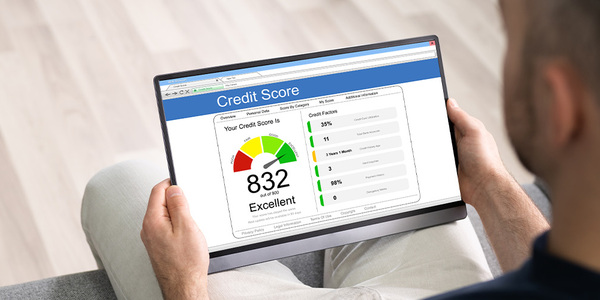
If you’re thinking about buying a home this year—or even just trying to understand where you stand—there’s one number you can’t afford to ignore: your credit score.
That three-digit figure carries significant weight as your credit score can influence almost every step of the buying process.
“Credit scores matter,” said Omer Reiner, a real estate agent and president of FL Cash Home Buyers in Fort Lauderdale, Fla. “Every type of mortgage loan has a minimum score that potential borrowers must meet to even be eligible.”
The good news is your credit score is one aspect of homebuying where you may be able to exert some control.
The rules of getting a mortgage have changed
The housing market in the early 2000s was rife with risky loans, minimal documentation, and lax vetting. Luckily, that period has ended.
Today’s market relies on buyers needing to prove strong financial fundamentals and tighter lending and vetting standards.
That’s not a bad thing—it means the housing market is healthier overall. But it also means your credit matters more than ever.
“Credit scores are the new sorting hat—they consider not only what you’ll pay in interest but your access to various [loans,] seller concessions, and even how quickly an underwriter will say ‘yes,’” said Jacob Naig, a real estate investor and agent based in Des Moines, Mich.
Your credit score shapes your mortgage rate

Mortgage lenders usually use FICO scores, which range from 300 to 850. Many lenders will work with borrowers with scores as low as 620—but just meeting the minimum won’t get you the best deals.
“You can still qualify for some mortgages even with a lower credit score,” said Reiner. “But the trade-off is a higher interest rate, costing you more each month on your payment.”
Borrowers with higher credit scores are often offered lower mortgage interest rates than those with lower scores. This can add up to steep savings over time.
Put simply, the lower your score, the more you’ll pay over the life of your loan.
Your credit score may affect mortgage insurance
A lower credit score doesn’t just mean a higher interest rate—it can also increase your mortgage insurance costs.
On Conventional loans, it’s called PMI—private mortgage insurance—and it’s typically required if you put down less than 20%. The lower your credit score, the more you’ll usually pay in mortgage insurance.
A credit score of 740 or higher means a “lower [mortgage insurance cost,] more affordable rate buydowns, and a stronger negotiation position,” said Naig.
In one recent Des Moines deal, Naig saw two buyers on the same block have very different outcomes.
“The borrower at 762 saved almost half a point on their loan rate and reduced their PMI by $110 a month,” he said. “The 663 borrower had to pay a higher PMI, so they had to drop their offer by $7,000 to try to make that higher monthly payment.”
Small credit improvements have a big payoff

You don’t need a perfect credit score to see great results. Small gains can open the door to better mortgage rates and lower monthly costs.
“Even improving your credit score 50 to 100 points can dramatically change what you can afford to buy and where,” said Ryan Duitch, founder and CEO of Arro Finance, a fintech company in Santa Monica, Calif.
Start your journey by examining your credit reports from Equifax, Experian, and TransUnion (you can do this free at AnnualCreditReport.com). Scan for errors, dispute inaccuracies, and pay down credit cards to lower your credit utilization.
“Start with your lowest balance and pay extra on that debt until it hits zero,” said Reiner. “Then tackle the next lowest balance and so on.”
Once your balances are under control, be sure to keep all payments current and avoid opening new accounts right before applying for a loan.
Credit is your best homebuying prep move
With so much conversation around mortgage rates and home prices, it’s tempting to focus on timing the housing market. But the buyers who are winning in 2025 aren’t necessarily the ones who waited.
“I’ve watched 2025’s tighter lending box reward disciplined borrowers,” said Naig.
So, whether you’re eyeing a purchase or laying the groundwork for the future, check your credit now. It may just be one of the most important things you do before buying a home.
Author




 Smart Moves Start Here.