

Homebuyers
This Is How Much Your Mortgage Interest Rate Will Really Cost You
January 21, 2026
If you’ve even thought about buying a home in the last few years, mortgage interest rates have likely been a topic of discussion at the dinner table.
While rates sank to historic lows in the 2% range in the first years following the pandemic, they eventually climbed to nearly 8%. Mortgage rates in late 2025 and early 2026 hovered in the low 6% range.
It may be hard to wrap your head around how much 6% interest will end up costing over a 30-year mortgage. But it’s important to understand that the higher the rate, the more you will pay in interest over the life of the loan.
“The easiest way to explain [a 6% interest rate] is that for every $100,000 you borrow, each 1% in interest costs about $1,000 a year,” explained R.J. Weiss, a certified financial planner and founder of The Ways to Wealth. “That cost does come down over time as you pay the loan off. But early on, it’s a helpful rule of thumb to understand why going from, say, 5% to 6% can noticeably change your cash flow.”
In honor of Financial Wellness Month, let’s explore how much mortgage rates really cost you in the long run—and how you can keep those costs down.
How much a 6% mortgage rate costs over 30 years
A 6% interest rate on a home loan isn’t nearly as high as rates were in the early 1980s when they topped 18%, according to Freddie Mac data.
It’s also important to understand what a mortgage rate is and why it’s part of the home loan.
A mortgage rate is the interest that a borrower pays in exchange for their lender lending them the money to buy a home (or refinance their existing mortgage). Put simply, it’s the cost of borrowing the money you’d need.
In most cases, the term of the home loan is 30 years. This enables the borrower to spread the cost of the interest over those three decades and establish a monthly payment they can afford.
That’s because the amount of interest you pay over time may be significant.
Therefore, it’s important to factor in that monthly payment when looking at the overall cost of a home loan. It really comes down to finding a payment that fits into your budget.
For example, buyers with a 6% rate may ultimately pay double the sale price of their home in interest charges by the end of 30 years, especially if they are making a small down payment.
Here’s how much a fixed 6% interest rate costs over 30 years for various loan sizes:
- $200,000 loan: $231,676 in interest
- $300,000 loan: $347,515 in interest
- $500,000 loan: $579,191 in interest
- $600,000 loan: $695,029 in interest
While those figures may feel daunting, the monthly mortgage payment on a $200,000 loan with a 6% interest rate would be just under $1,200. On a $300,000 loan, the monthly payment would be just over $1,800.
So, while the overall repayment amount may seem substantial, the monthly payments help make it a little easier to understand.
Beyond that, it’s also important to know that a half of a percent difference on a mortgage rate might not seem that dramatic, it can have a long-term impact on your finances.
For instance, a $500,000 mortgage at 6.5% costs $637,722 in interest over 30 years. Dropping the rate to 6% reduces interest costs to $579,191. That’s more than $58,500 in savings over time.
How to get a lower interest rate on your mortgage
By and large, mortgage rates are what they are. There’s usually not a lot of wiggle room with them.
However, not everyone gets the exact same rate when they apply for a loan on the same day. There’s still some variability within what seems like a rather rigid rate. So how do you ensure you get the lowest rate possible?
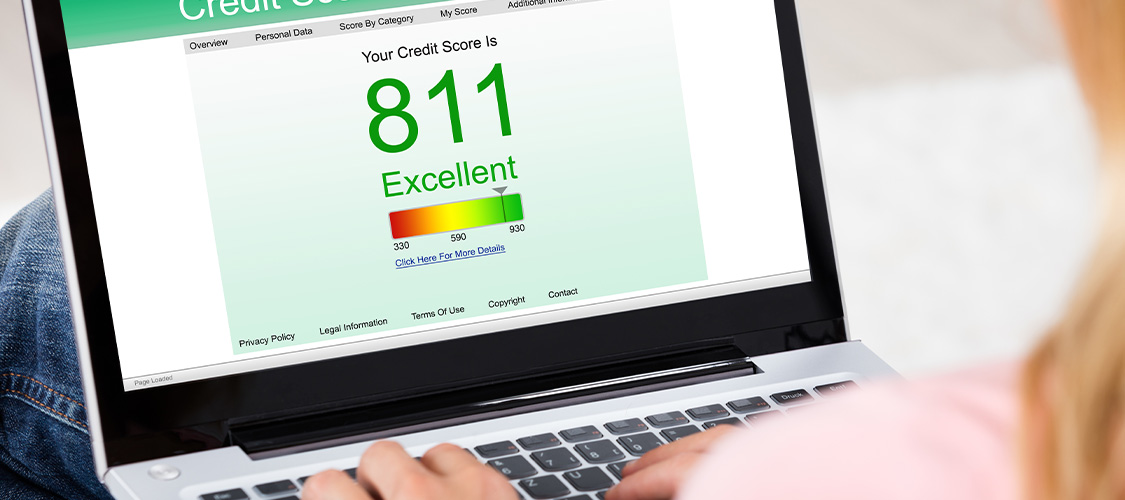
As with most borrowing, it comes down to excellent credit, a higher (stable) income, and a low debt-to-income ratio (how much debt you have compared to how much you earn.)
If you can wait to buy a home until you’ve improved your credit score, landed a higher-paying role at work, and paid down other outstanding debts, you’re more likely to get approved for a home loan at a lower rate.
But if you can’t wait that long, there are other options to lock in a lower rate:
You can purchase mortgage points to lower your rate
Ask your lender if you can permanently buy down your mortgage rate with mortgage points. Typically, it costs 1% of the total mortgage amount to reduce your rate by a quarter of a percentage point.
For instance, to reduce your interest rate by a full 1% on a $200,000 loan, you’d have to pay 4% of $200,000, or $8,000, at closing. That’s on top of your down payment and any other closing costs.
While that sounds steep, it may save you a lot of money over time.
“Paying points can make sense, especially if you expect to be in the home long enough to recoup the upfront costs,” Weiss said.
You can look for temporary rate buydown incentives
Occasionally, you might be able to get a temporary mortgage rate buydown without paying a cent. Motivated sellers, homebuilders, and sometimes even mortgage lenders may pay an upfront fee on your behalf to lock in a temporary lower interest rate, often for the first few years of the loan.
You can ditch the 30-year fixed-rate standard

The 30-year fixed-rate mortgage has become the gold standard, but it’s not your only option.
For instance, you may be able to get a 15-year mortgage with a lower rate and less interest owed. The downside is the monthly payment is significantly larger due it the loan being paid back in a shorter amount of time.
Similarly, you may want to consider an adjustable-rate mortgage (ARMs). While ARMs typically start with a lower interest rate for several months or years, the interest rate can eventually change (up or down) and potentially surpass the rate you would’ve gotten on a fixed mortgage.
It’s important to note though that ARMs typically come with what’s known as a rate cap. This establishes how high your rate could go if market rates should rise during the loan term.
It’s also possible that interest rates could move lower over the course of your loan, allowing you to take advantage when your rate resets.
You can plan to refinance the mortgage later
If you get a fixed-rate loan, then your mortgage rate is locked in for the life of the loan. However, you may be able to change your rate with a mortgage refinance. If rates improve in the future or your credit score increases, it may be worth refinancing to lock in a lower rate.
“A refinance can lower costs down the road,” he said. “[But] you don’t want to stretch your budget assuming a refinance will save you later.”
Author



 Smart Moves Start Here.