
Inclusive Lending
How Asian Americans Are Building Wealth Through Homeownership
May 4, 2026
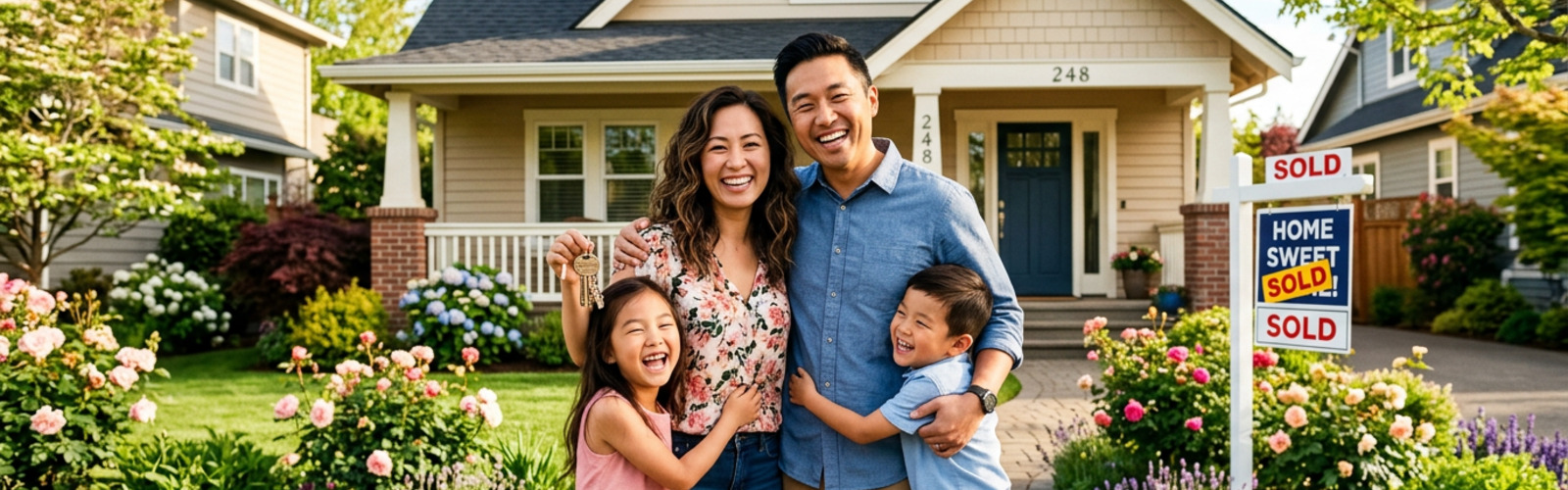
In honor of Asian American and Pacific Islander Heritage Month, we’re taking a closer look at one of the most powerful ways many Asian American families are building lasting wealth: homeownership.
Asian American, Native Hawaiian, and Pacific Islander (AANHPI) households are among the fastest-growing groups of U.S. homeowners. The population now totals roughly 26.8 million people nationwide, according to the U.S. Census Bureau.
For AANHPI households, buying a home is not the moment wealth is made. Staying in it for long periods of time allows them to build valuable equity.
That is the central finding of a recent report from the Urban Institute, which tracks how wealth evolves for AANHPI homeowners.
The homeownership equity arc for Asian American households
Building wealth through homeownership is a long game. Median home equity hovers around $180,000 in the first five years of AANHPI ownership, according to the Urban Institute. Then it typically almost doubles to more than $340,000 by years six through 10 and keeps climbing.
The slower equity building at first is because early mortgage payments go mostly to interest. And the homebuying costs absorb much of the initial appreciation.
However, what may feel like a stretch of equity building in the first years of homeownership is the foundation being laid.
When AANHPI households draw on home equity, it’s often used to fund broader family and financial goals, such as spending on education.
Many Asian American households stay in their homes for longer periods
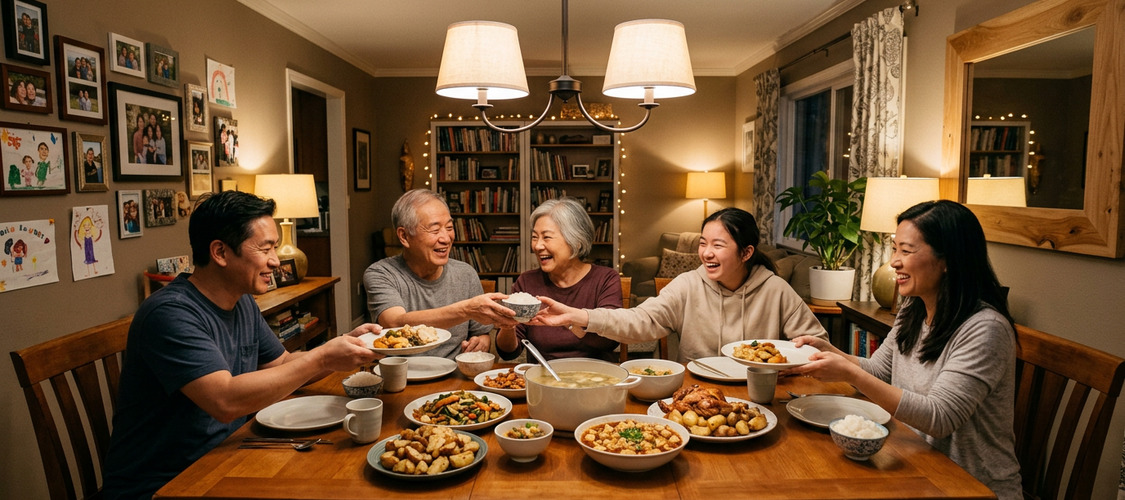
Many AANHPI households hold onto their homes longer than other groups. Real estate is often used as part of a multigenerational financial strategy rather than as a short-term asset.
What might look like cultural preference turns out to be precisely the behavior that building equity rewards.
“The AANHPI community greatly values homeownership as many of the older generations have built their wealth from homeownership,” said Justin Chau, a real estate agent at exp Realty in California’s San Gabriel Valley.
“It’s also important to note that the AANHPI community has a lot of restaurant and business owners, who already deal with commercial real estate on a regular basis,” he said.
Households that sell early often give up much of the equity once closing costs and early loan structures are factored in. The longer AANHPI homeowners stay, the more the underlying math works in their favor.
Who is getting left out of homeownership?
The gains in AANHPI homeownership are real, but access to them is uneven, and disparities begin at the point of entry.
Higher mortgage denial rates, language barriers, and low participation in homebuying assistance programs shape which AANHPI households enter the housing market.
Their equity building is often based on the terms of their home loans, geographic location, and income levels. This can all influence how much wealth any given homeowner ultimately accumulates.
For those who become homeowners, strained budgets can force a sale before equity has had time to build.
Even for those who stay over the long term, the wealth their homes hold isn’t always easy to reach. Disparities in refinancing and cash-out access limit how readily AANHPI homeowners may be able to use their equity.
Nearly half of Asian homeowners age 65 and older expect to leave an inheritance, a higher share than in other groups, according to the report. Yet only about 10% report having received one themselves.
“The idea of owning a home as an investment to grow equity and eventually use that equity to expand their businesses has always been appeal[ing,]” said Chau. “And [that] is why households tend to avoid selling in order to maximize equity growth.”
Author


 Stay one step ahead