

Homebuyers
The Money-Saving Listing Words Smart Buyers Should Never Ignore
November 6, 2025
Scroll through enough home listings and they may all start to sound the same. Granite countertops. Open concept. Light-filled.
But tucked between those familiar clichés are a few phrases that reveal far more than a sunny breakfast nook ever could. These are the words that signal a deal may be hiding in plain sight for homebuyers who know how to read them.
In a market where home prices remain high, decoding listing language can be its own form of strategy. Indeed, agents choose their words carefully to signal a deal.
“Here are examples of language I use when I want to signify that my seller is serious and negotiable: seller will consider all reasonable offers, priced to sell, and serious seller,” said broker Jennifer Roberts of New York City’s Coldwell Banker Warburg.
If you learn to spot the right language, you may be able to save thousands before you even set foot inside a showing. Here’s a rundown of words to filter for.
“Assumable mortgage”
This is the rare unicorn of real estate terms and one that can save you serious money. It means the seller’s existing mortgage, and its interest rate, can be transferred to you.
Imagine taking over a seller’s 3.25% mortgage instead of applying for a new one in the mid-6% range. On a $400,000 loan, that difference could lower your monthly payment by hundreds of dollars.
Just note that not every mortgage qualifies. Most assumable loans are FHA, VA, or USDA-backed. But if you see this phrase, act quickly and ask questions.
“Price reduction” or “recently reduced”

A price cut is real-estate shorthand for the seller is ready to listen.
When a home sits on the market longer than expected, sellers lower the price to re-ignite interest. For buyers, that means leverage.
If you see this phrasing, dig into the timing. A small reduction after two weeks might mean a seller is testing the waters. A major cut after two months likely means the seller’s patience is wearing thin. That’s when you can negotiate harder and make a deal.
“Seller concessions” or “seller will pay closing costs”
This phrase should make buyers’ ears perk up. Seller concessions mean the homeowner is willing to cover some of your upfront expenses, such as closing costs, inspection credits, or even temporary rate buydowns.
Closing costs typically run between 2% and 5% of the purchase price. On a $500,000 home, that’s $10,000 to $25,000. If the seller is offering to shoulder part of that burden, you’ve already lowered your cost before signing anything.
“Motivated seller” or “must sell”
Few words are more revealing than these. “Motivated” is real-estate code for urgency, sometimes even desperation. Maybe the seller has a job relocation, a new build nearing completion, or financial pressure.
Whatever the reason, this is your cue to ask pointed questions.
“Terms like ‘motivated seller’ or ‘priced to sell’ are often overused, so it’s worth looking beyond the headline,” said Brad Smith, a real estate advisor with Spears Group in Northwest Florida. “Check the days on market and any price adjustments to see if the listing truly reflects a motivated seller.”
Bottom line? If a motivated seller wants out, a prepared buyer can make that happen on their terms.
“As-is”
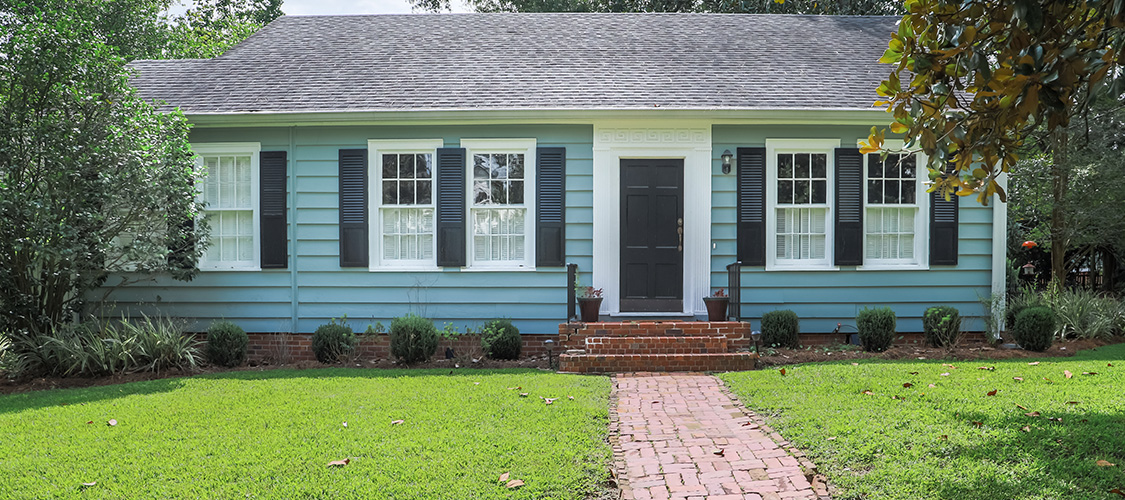
“As-is” tends to make buyers nervous with good reason, it sounds like you’re buying someone else’s problems. But in the right situation, it can translate into an opportunity.
“Typically, if buyers see ‘as is’ or ‘needs TLC,’ they immediately think it could be a money pit and move on to the next listing,” said Roberts.
Indeed, a home sold “as-is” means the seller won’t make repairs. However, if your inspection uncovers needed work, you can use those costs to negotiate the price down, even if the seller doesn’t do the fixes themselves.
“You can also look at it as an opportunity to customize it to your own taste, rather than buying something with someone else’s taste,” said Roberts. “The goal is to get someone into the home, and in reality, it may not be as bad as the words let someone envision.”
The key is knowing what you’re getting into.
“Backup offers welcome”
Many buyers skip this one, assuming a home already under contract is off-limits. But that could be a mistake.
When a listing welcomes backup offers, the sellers are keeping the door open in case the first deal falls apart.
And plenty do. Financing can fail, inspections can spook first-time buyers, or timelines can collapse. Submitting a strong backup offer costs nothing but puts you next in line if the deal implodes. It’s one of the smartest, least-used strategies in real estate.
“Short sale,” “pre-foreclosure,” or “bank-owned”
These phrases can look intimidating, but for the right buyer they can mean value.
In a short sale, the lender allows the home to sell for less than what’s owed on the mortgage, a sign the owners are underwater and need out. These deals take longer, since the bank must approve the sale, but discounts can be substantial.
Pre-foreclosures and bank-owned (REO) properties come with their own quirks, including delayed timelines, potential repairs, and more paperwork. Yet they can offer below-market pricing for buyers who have patience.
“Needs TLC,” “great potential,” or “bring your imagination”
“‘Bring your contractor, architect, imagination’ are simply all clues that work must be done in the unit, and the seller is ready to negotiate,” said broker Gerard Splendore of New York City’s Coldwell Banker Warburg.
Indeed, “TLC” often means the home is dated, not dilapidated. Cosmetic updates—paint, flooring, lighting—can yield major returns without major risk.
Just crunch the numbers: if the property is priced $50,000 below comparable homes and needs $25,000 in updates, you’re already ahead.
Author




 Smart Moves Start Here.