Homebuyers
Homes Are Getting Smaller. Does That Mean They’re Also Cheaper?
November 3, 2025
If you’re a homebuyer who has been browsing real estate listings lately, you might have noticed a change in the newly constructed homes for sale. They are getting smaller.
At first glance, less square footage should mean more affordability. But in today’s housing market, that’s not always true. Prices per square foot are remaining steady, and in some areas, they are still going up.
Meanwhile, the layouts of new homes themselves are changing as builders try to maximize every inch of usable space within smaller footprints.
So, how should buyers interpret this wave of smaller homes? Here’s how to shop smart this fall.
Why home sizes are shrinking
After a brief surge in the post-COVID building boom, home sizes have been edging down, primarily driven by today’s affordability pressures.
The median size of completed single-family homes fell to about 2,146 square feet in 2024 from 2,183 in 2023, the smallest in more than a decade, according to U.S. Census Bureau data.
The typical square footage slipped even further to roughly 2,125 square feet in mid-2025, according to the National Association of Home Builders’ (NAHB) quarterly analysis.
“The trend towards smaller new-construction homes is very real,” said Seth Phillips of LaVenta Realty of Marina Del Rey, Calif. “It’s a direct response to the fundamental economic pressures facing both builders and buyers today.”
With prices for everything from lumber to copper wiring and labor in construction elevated, offering a smaller footprint helps achieve a lower list price without stripping away upgrades.
To reclaim space, builders are jettisoning certain rooms, like rarely used dining rooms, and creating more areas in homes that can be used in a variety of ways. This can be a space used as a workout room, home office, or playroom, depending on the need.
“This is precisely why we’re seeing the decline of single-purpose spaces,” said Phillips.
Indeed, many new designs are eliminating hallways to reduce “wasted” circulation space, according to the New Home Trends Institute.
Meanwhile, Axios reports that approximately 80% of designers working on new-home communities say formal dining rooms have lost importance over the past year. Instead, rooms open directly into one another, and flex spaces pull double duty.
The rising cost of newly constructed homes
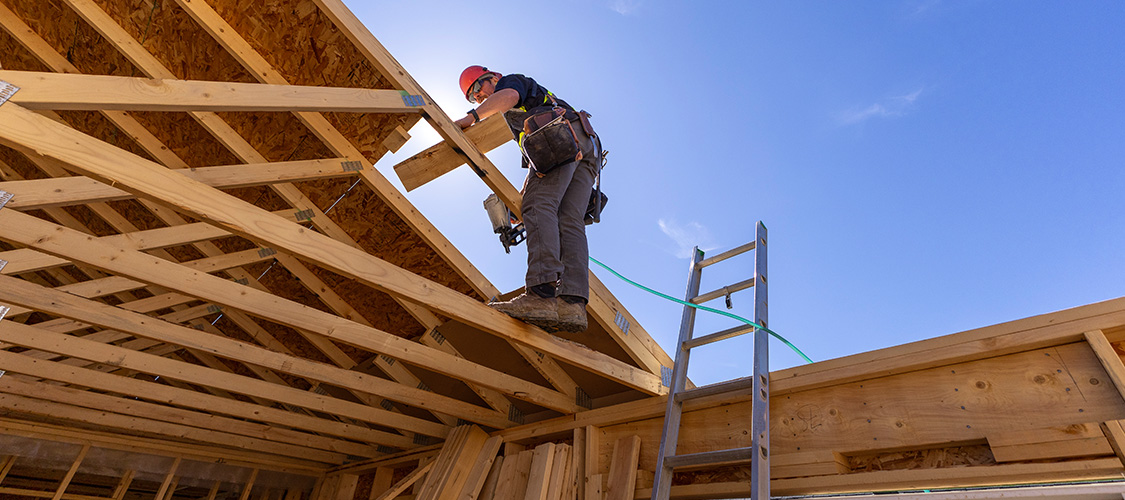
Even as homes lose square footage, sellers are still asking nearly the same amount for their residences. That means buyers are paying more for less home.
“High fixed costs for land, permitting, and utilities mean that the price-per-square-foot on these smaller, efficiently designed homes can sometimes be higher than their larger counterparts,” said Phillips. “In essence, buyers are trading square footage for a more accessible entry price into homeownership.”
This trade-off often allows builders to deliver a more cost-effective home.
In some areas, especially the Northeast, the price per square-foot has increased by a few percentage points, while in parts of the South and West, it’s declining slightly, according to Realtor.com. This difference highlights that geography and demand still matter more than raw size in many markets.
Buyer takeaway: A 1,600-square-foot home at $250 per square foot may cost the same as a 2,000-square-foot home at $200 per square foot.
Run the math before assuming the smaller home is more affordable. Also, remember to factor in the cost of any necessary renovations or upgrades.
Home condition and layout can outweigh size
Sellers know buyers today want turnkey homes, so they’re focusing on cosmetic upgrades rather than dropping prices.
That means you might see a 1,700-square-foot home with a brand-new kitchen and bath competing with a 2,000-square-foot home that needs updates.
And thanks to builders’ design changes, smaller homes can feel more open. Eliminating hallways and formal dining rooms shifts more of the home’s footprint into living, kitchen, and bedroom spaces. So, you may not feel the smaller size as acutely.
Indeed, flex rooms that double as an office, kid’s area, or guest space are replacing formal dining rooms and separate dens.
Buyer takeaway: Evaluate how the space lives, not just how it measures up. Walk through with an eye on flow and natural light. Ask yourself: Could you reconfigure a dated, larger home for less than the premium of buying a new but smaller one?
How to make a small home more affordable

Even with less square footage, high home prices can limit affordability.
However, today’s slower market enables buyers to negotiate financing perks they couldn’t before. Builders and motivated sellers are increasingly offering financial incentives to make deals more attractive.
Here’s what you can ask for as a buyer:
- Ask for home seller-funded mortgage points: This can lower your mortgage interest rate temporarily, for the first one to three years of your mortgage. Or it can be a permanently lower your rate, potentially shaving hundreds off your monthly payment.
- Explore adjustable-rate mortgage: With rates trending lower, a 5/1 or 7/1 adjustable-rate mortgage (ARM) might give you breathing room up front while you wait for an opportunity to refinance.
- Use your savings strategically: If a smaller home means a lower purchase price, consider using that freed-up cash for a larger down payment, renovations, or an emergency fund.
“There’s a huge glut of large, suburban homes that simply aren’t holding their value because people can’t afford to buy them,” said Martin Orefice, CEO of Orlando, Fla.-based Rent to Own Labs. “Smaller homes are a natural response to this market trend.”
Author



 Stay one step ahead