
Housing News
The Typical First-Time Homebuyer Has Never Been Older. What Does That Mean for Younger Generations?
November 12, 2025
Unfortunately for younger people who want to become first-time homebuyers, it seems that the easiest way to buy a home these days is by already owning one.
Just 21% of all homebuyers in the last year were buying their first abode, according to the National Association of Realtors’ 2025 Profile of Home Buyers and Sellers report. Meanwhile, 79% of homebuyers were previous homeowners.
Beyond that, the average first-time homebuyer was 40 years old, a record high.
Before 2008, first-time buyers, typically in their late 20s, made up about 40% of the housing market.
Pricey rent and student loans, along with high prices and elevated mortgage rates, have made it harder for many to achieve homeownership.
“The historically low share of first-time buyers underscores the real-world consequences of a housing market starved for affordable [homes for sale,]” said NAR Deputy Chief Economist Jessica Lautz in a statement. “Today’s first-time buyers are building less housing wealth and will likely have fewer moves over a lifetime as a result.”
The data is based on an NAR survey of more than 6,100 people who purchased a primary home between July 2024 and June 2025. The survey did not include investors and those purchasing investment homes.
How are today’s first-time buyers becoming homeowners?
Today’s first-time buyers are now putting down a median 10% of the sale price, the highest percentage since NAR began conducting the survey in 1989. That’s particularly challenging as home prices have jumped substantially since the pandemic in most of the country.
Over the last six years, sale prices jumped 52.9% for existing homes from September 2019 to September 2025, according to NAR data.
It is worth noting that a 10% down payment is half of the 20% that many people believe they need to save up to buy a home.
There are also many loan options that require much smaller down payments, including Conventional loans, Federal Housing Administration (FHA) loans, U.S. Department of Agriculture (USDA) loans, and U.S. Department of Veterans Affairs (VA) loans.
Even more challenging is just over a third of buyers are doing it on one salary. Solo women made up 25% of first-time buyers, while single men represented 10% of buyers. Married couples comprised the bulk of first-time buyers, at 50%, while 11% were unmarried couples. Another 4% identified as “other.”
More than half, 59%, of first-time buyers came up with the money for a down payment through their savings. Another 26% used their investments, while 22% relied on help from family and friends.
Who are today’s homebuyers and what kinds of homes are they purchasing?
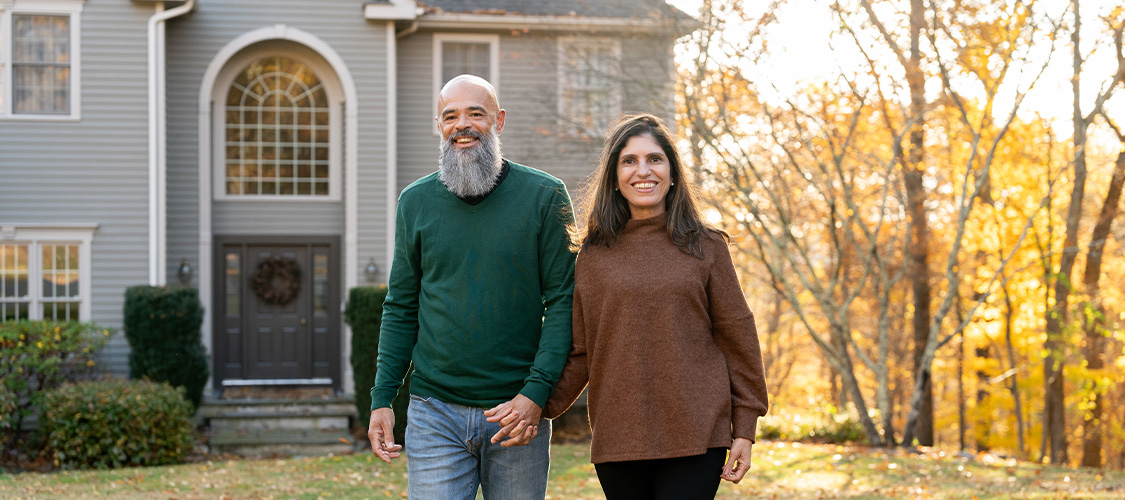
Homebuyers, in general, have gotten grayer. The typical buyer is now 59. Many are repeat buyers who can use the equity they gained in their previous homes to purchase new ones.
And most aren’t buying homes to raise families in. Under a quarter, 24%, of all buyers had children under the age of 18 living with them.
“We’re seeing buyers with significant housing equity making larger down payments and all-cash offers,” said Lautz. “[Meanwhile,] first-time buyers continue to struggle to enter the market.”
Buyers overwhelmingly chose existing homes, 88%, over new construction, 12%. Single-family homes made up about three-quarters of purchases, with the typical home spanning 1,900 square feet with three bedrooms and two bathrooms.
Most buyers chose suburbs, 44%, followed by small towns, 24%, 15 in rural communities, 14% in cities, and 3% in resort areas.
What can prospective homebuyers do to become actual homebuyers?
While the numbers may seem daunting or even discouraging, consider that these are just statistical representations of what’s happening in the market. They are not hard and fast rules.
Many younger people have been able to buy a home using one of the loan programs mentioned above, thanks to their lower down payment requirements.
Work to save as much as you can and build your credit. Each will help you when you’re ready to buy your first home.
Make sure you talk to a loan officer who can help walk you through your loan options and find one that makes sense.
Educate yourself on what it truly takes to buy a home. You may find that you’re much closer than you thought.
Author


 Stay one step ahead