

Homeowners
Splish Splash: How Homeowners are Financing Pools with Home Equity
May 29, 2026
Now that summer is almost here, a pool may sound like a dreamy backyard upgrade. After all, what’s better than spending sunny summer days in the water without ever leaving your home?
If you don’t have the cash on hand to pay for a pool, you may be able to leverage your home equity to fund it. These home loans may allow you to finance the upgrade over time instead of having to pay in full upfront.
However, there are a few things to consider, including whether your property can accommodate a pool, the costs, and potentially low returns on investment.
“A swimming pool should be more of a lifestyle decision than an investment that increases your property or resale value,” said real estate agent Ryan Fitzgerald of Raleigh Realty in North Carolina. “Only consider it if it fits your personal preferences and long-term plans,”
So, is using your home equity to pay for a new pool right for you? Here’s what you need to know.
What it takes to build a pool on your property
While building a pool is exciting, it also requires patience, preparation, and of course, money.
How much does it cost to build a new pool?
On average, you’ll pay anywhere from $44,499 to $87,349 to build an inground pool on your property, according to the latest figures from Angi, a home services marketplace. Your exact cost will depend on where you live as well as the size, style, and material of your pool as well as the scope of the work.
An above-ground pool is typically considerably less expensive, generally between $1,800 and $8,000 when installation and materials are included, according to Angi.
Here’s what to consider before you install a swimming pool on your property.
Zoning and permits for a pool on your property
Before you start work on a new pool in your yard, you need to request property permits and approvals from your local governmental authority. You’ll also need to meet all the local rules as well as building and safety codes.
In addition, your contractor will need to apply for a permit that covers the structural inspection, electrical work, and fencing installation. Depending on where you live, this may run you between $450 and $1,800, according to Angi.
How large must your yard be to install a pool?
Yard size is important when building a pool. Most jurisdictions require a minimum setback of five to 10 feet from the nearest property line or structure to the pool’s edge. Confirm you meet this requirement before you proceed with a pool project.
Understand that even if you have a large yard, it may not fit a standard-sized pool with 12 x 24-foot dimensions after accounting for the required setback.
Property grade for a backyard pool
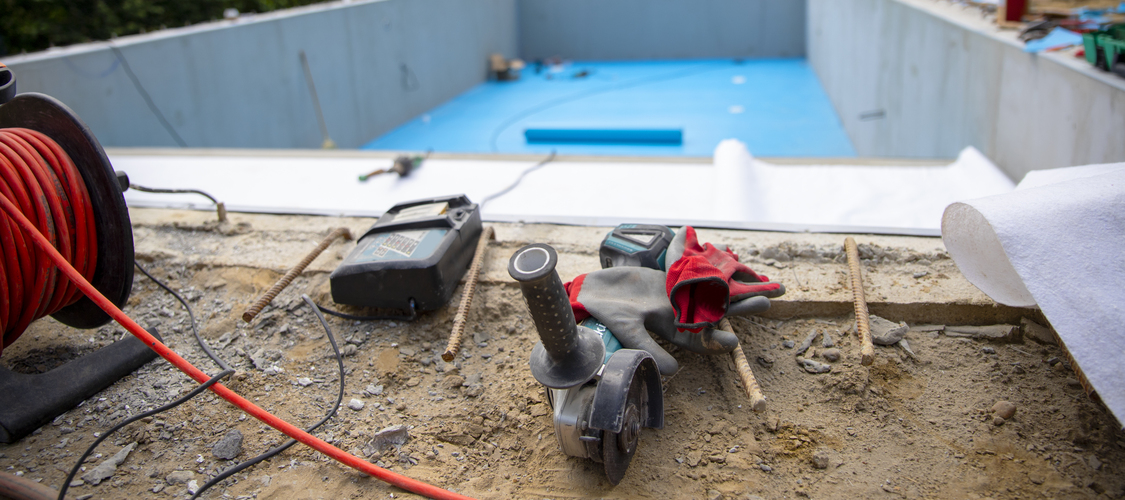
Many homes sit on sloped land and will require cut-and-fill grading prior to any excavation work for a swimming pool installation.
This may cost between $5,000 to $20,000 or even more, depending on the slope of the land and the method of grading required, according to Angi.
That’s why it’s a good idea to have your yard assessed before you shop for a pool shape or design.
Soil type
If your soil is rich in organic components and has a balanced proportion of sandy and clay layers, it may be optimal for digging an inground pool.
Hard rock and hardpan, on the other hand, aren’t ideal for a pool install. This could increase excavation costs by thousands of dollars.
How to tap into your home equity to finance a pool
There are a few ways you can use your home equity to cover the cost of a backyard pool installation.
Home equity line of credit (HELOC)
A HELOC is a revolving line of credit that lets you withdraw as much or as little cash as you’d like up to your credit limit during the draw period. This period typically lasts for five to 10 years and then you pay it back over the following 10 to 20 years.
This is the preferred option for many homeowners as you’ll only pay interest on the funds you use and there’s no impact on the interest rate or fees of your primary mortgage.
It also offers flexibility, which is important if you don’t know exactly how much your pool will cost.
Cash-out refinance
With a cash-out refinance, you take out a new, larger mortgage to pay off your old one and pocket the difference in cash. You can then use the cash to cover your pool installation.
This home equity solution is often best for homeowners with mortgage interest rates that are equal to or above current rates.
Home equity loan
Also known as a second mortgage, a home equity loan is a home loan in addition to your existing mortgage. Typically, it provides homeowners with a lump sum of cash up front. You can put it toward your pool and then repay the loan through fixed monthly payments.
A home equity loan might make sense if you want to lock in a fixed interest rate and budget for your payments in advance.
What to consider before moving forward
It may be tempting to commit to a pool install, especially if your property meets all the requirements and you have the home equity to help fund the project.
Before you do so, however, there are three key considerations to keep in mind.
Are backyard pools safe?
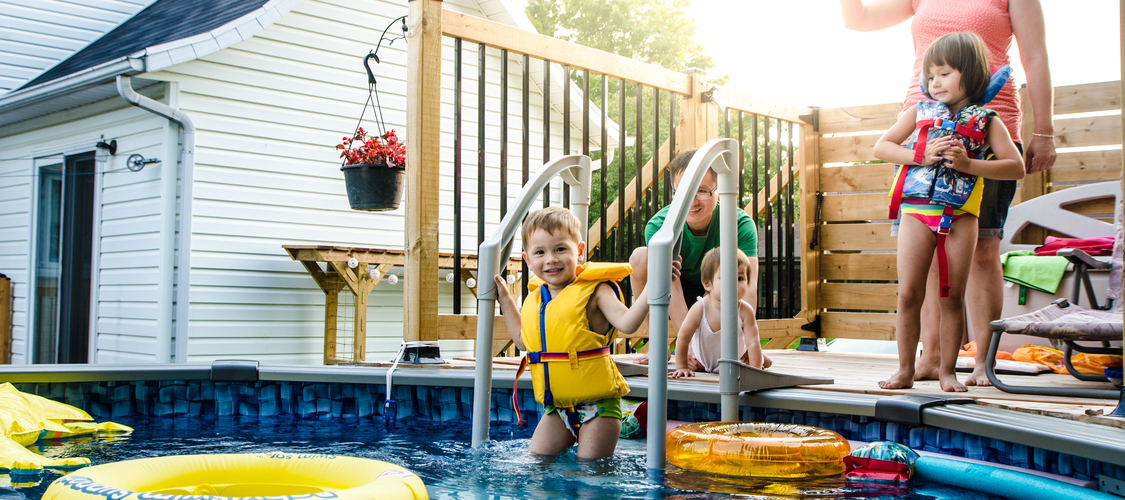
Pool safety is paramount, especially for families with small children. An average of 379 children under 15 die annually because of drowning at pools and spas in the U.S., according to the Consumer Product Safety Commission.
So, if you’re going to build a swimming pool, your first consideration should be to protect young children from injury and drowning.
“To ensure optimal safety, you’ll need four sides of fence around the pool and a self-latching gate,” said Fitzgerald. “In addition, an alarm at every pool entry point [may be] well worth it.”
Do backyard pools offer strong ROI?
Unlike other home improvement projects like kitchen and bathroom remodels, the ROI of a pool installation is fairly low.
In some cases, it may actually hurt property values, as families with younger children and older buyers may not want a pool. Other buyers may not want to deal with the ongoing costs and maintenance.
“A swimming pool can add value to your property, but it can also detract from it as many buyers view it as a burden,” said Fitzgerald. “Only invest in one if you and your family will likely enjoy it for the next 15 or more years. It’s not a way to make money when you sell your home.”
Maintenance and carrying costs
Annual maintenance costs for a pool usually range from $500 to $4,000 and include chemicals, electricity, regular service, pool opening, and closing procedures, according to Angi.
Additionally, your home insurance premiums may also jump. Property taxes might rise as well.
Do the math and consider how much you’ll pay over the course of a decade once you’ve already covered the installation costs. You want to ensure you’re comfortable with this amount before moving forward.
Author


 Stay one step ahead