
Homebuyers
The Smart Parent’s Guide to Buying a Home With Kids in Mind
December 19, 2025
Any parent who has ever tried bathing a toddler in a stand-up shower knows a tub may be a non-negotiable when buying a home. But while that detail might be obvious to families, the rest of a kid-friendly home isn’t always so clear-cut.
Indeed, there are plenty of other details that can make a home work for a family.
“Think through longer term than just the immediate future,” said real estate professional Elizabeth Powers of Christie’s International Real Estate Sereno in San Jose, Calif. “Make sure that things are easy to baby-proof, but also functional as kids get older.”
Here’s what parents should consider when shopping for a home with kids in mind with some tips on finding a property that will work for the whole family, not just for now, but for years to come.
School districts: The make-or-break factor when buying a home
It’s no surprise that access to good schools tops the list for many families buying a home.
“As a parent of school-aged children, I encourage my clients to research the local school district, which school that address is zoned for, and what other schooling options might be available,” said Brittany Grier, a real estate agent with Idaho’s The Moir Group at The Agency Boise.
“It’s also always helpful to call the district to get answers to the questions they might have,” Grier said. “Hearing the first-hand experience of other parents can also be beneficial.”
In other words: don’t just look at the district ranking online. Ask questions. Tour the school if you can. And remember: a “good fit” is subjective.
A top-rated school may not be the right place for your child if it’s oversized or doesn’t offer the programs you value most.
Parents often think about where the bedrooms are located
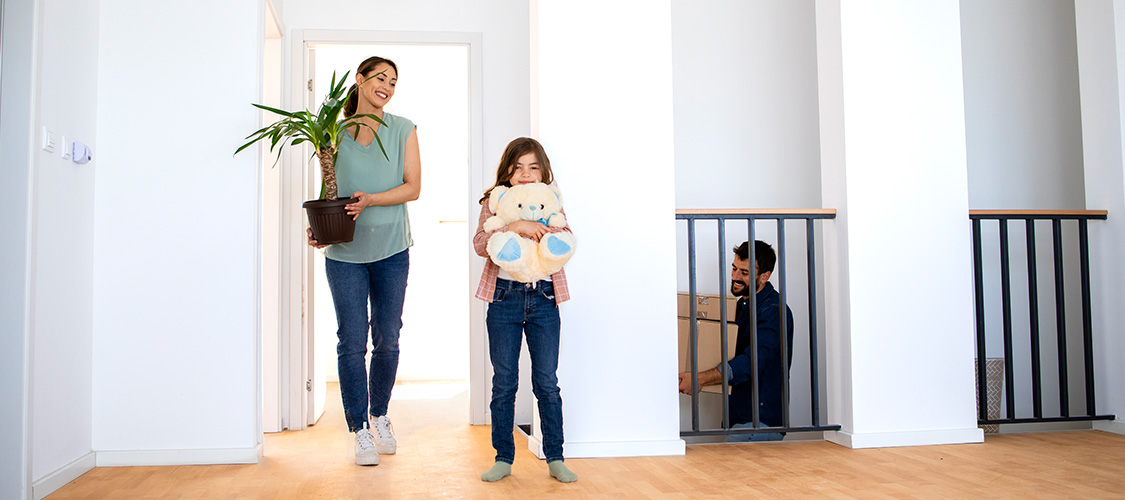
Bedroom placement is another big consideration.
“Some parents have communicated that they want all bedrooms on the second floor,” said Sean Gilliam of LoKation Real Estate in Longmont, Colo. “Parents want their children’s bedrooms close to theirs for that extra peace of mind and so they can tend to them if they need anything.”
Other buyers may want children on the second floor, where they are less vulnerable than they would be with a ground-floor bedroom that is more easily accessible to outsiders.
Home layouts that work for family life
Beyond bedrooms, the way a home is laid out can determine how livable it feels with kids. Parents with very young children often worry about stairs, while parents with teens often love having two levels for privacy.
“The layout decision really depends on your parenting stage, but it’s smart to think several years ahead, not just about today,” said real estate professional Jennifer Long, at Corcoran in Napa, Calif.
Basements can also be a game-changer. If you utilize them appropriately, they can add significant usable space to a home. Think playrooms, teen hangouts, or storage for the mountains of gear that come with kids.
Just beware. “Dark and damp doesn’t exactly scream family-friendly,” said Long.
Even seemingly small conveniences can make a huge difference in family life. “Laundry on the same floor as the bedrooms saves parents endless trips up and down the stairs,” added Long.
Commute and convenience matter to homebuyers with children

Parents often focus on the number of bedrooms a home has, but it’s the daily flow of life—commute, school drop-offs, after-school activities—that can make or break a home’s fit for a family, advised Long.
When scoping out homes, map out your daily routine. How long will it take to get from the home to daycare? To the pediatrician? To your office during rush hour? Proximity to essentials, such as grocery stores, playgrounds, or urgent care, can save you from burnout.
A well-located, smaller home might ultimately be more livable than a sprawling property that leaves you stuck in traffic. And don’t forget, as kids grow, so do their destinations.
Safety is important to families when buying a home
When you’re buying a home with kids, safety is a top priority.
So, buyers should be on the lookout for stairs without railings, pools without fences, or a busy street right outside the front door. These may give you pause.
Don’t just evaluate the home, also consider the neighborhood. Is there a sidewalk for bike rides or a nearby park or green space? Does the street have a reputation for heavy traffic or noise? These factors greatly influence whether your family will feel safe and comfortable.
If you’re buying in a condo or planned community, ask about kid-friendly amenities. A shared pool, playground, or community center can give kids a safe space to play (and parents a built-in support system).
A home with room to grow for families

Families rarely stay the same. The nursery that feels roomy today might feel cramped once you add a toddler bed, then a desk. And if you’re planning to have more kids, or expect relatives to stay over, you’ll want to think ahead.
Extra bedrooms are the obvious solution, but square footage isn’t everything.
“Is there room for a desk in the bedroom, or an area that you can carve out for a homework nook?” said Powers. “Is there ample closet space for kids to grow into?”
Flexible spaces, like an attic or a bonus room, can adapt as your family’s needs shift. An office today might become a teen hangout tomorrow.
Outdoor space also counts as “room to grow.” A family can underestimate how valuable that private outdoor space is until they’ve lived without it. Even a modest yard or a nearby park can be a lifesaver for letting kids run off extra energy.
Author




 Smart Moves Start Here.