

Homebuyers
Planning to Build Your Forever Home? How to Purchase Land with an FHA Loan
November 13, 2025
Spacious spa-like bathrooms, expansive outdoor spaces, or a decked-out kitchen—any of these may be must-haves for you. But it can be difficult to find that forever home in a time when the number of homes for sale is still low.
That’s where new construction comes in. In today’s market, buying a piece of vacant land and building the home you’ve always wanted on it may be one of the best ways to get exactly what you want.
You don’t have to get stuck with multi-step construction loans, either. You may be able to use an all-in-one Federal Housing Administration (FHA) loan to help cover the cost of buying a piece of land and funding the construction of your new home.
Here’s what you need to know.
How to buy land with an FHA loan
You can’t use a typical FHA purchase loan to buy a vacant piece of land. Rather, you’ll need an FHA construction-to-permanent loan (also known as a one-time close construction loan).
As its name implies, these types of government-backed loans can be used to finance the construction of a new home, along with the purchase of the land it will sit upon.
Once construction finishes, the loan will convert into a standard FHA loan without you needing to close on a new loan.
FHA construction loans—especially when they’re used to purchase vacant land—can make for a complicated financing process. And that’s before you even finalize choosing the finishes you prefer for your new home.
“Having a good team, a builder who’s done this before, and a lender who can walk you through the process step-by-step, is key,” said Oklahoma City-based general contractor and developer Jarred Smith.
The limits of using an FHA construction loans

FHA construction loans come with a few crucial caveats when they’re used to purchase vacant land.
One of the biggest is that FHA construction loans require that you must have immediate plans to build a home on the land. The property can’t remain vacant indefinitely.
An FHA loan can’t be used to finance the construction of a picture-perfect vacation home on that mountainside lot, either. FHA construction loans can only be used for primary residences. These are homes you live in full-time.
There are also limits to how much money you may be able to borrow with an FHA construction loan.
In 2025, FHA loan limits were $524,255 for single-family homes in most locations. In pricier parts of the country, borrowers may be able to take out more than $1.2 million.
FHA borrowers will be subject to all the other normal FHA loan requirements as well. This means buyers typically need credit scores of at least 580. Scores as low as 500 may be considered if buyers make larger down payments.
These include paying the mortgage insurance premium, which is rolled into your monthly mortgage payment if you don’t put down at least 20% of the sale and construction price.
What to consider when building a new home
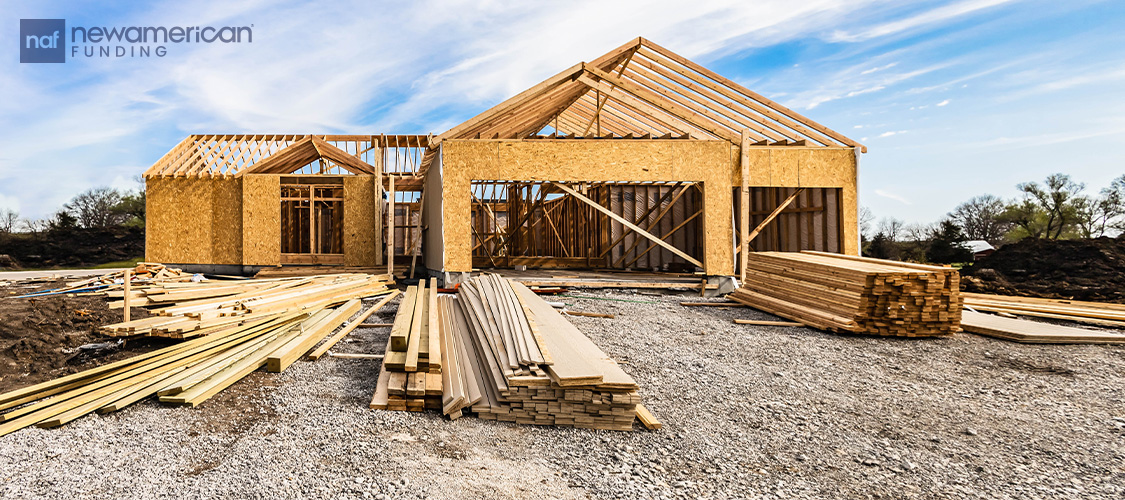
Finding the right site for your new home is key.
When looking for vacant land, make sure you understand what utilities a lot has or still needs. A piece of land that lacks a connection to a town’s water line or power supply will require some expensive utility work.
Don’t underestimate the cost of constructing a brand-new home. Materials and labor costs can rise unexpectedly, and delays are common, which can push up the final price tag. And unwelcome—and costly—surprises are common.
“[Buyers] often think they can build for less than what it actually takes,” said Smith. “That leads to either pausing construction to secure more funds or having to make cuts they weren’t prepared for.”
That’s why it’s important to interview more than one architect and contractor, get multiple price estimates, and check reviews.
And don’t forget to consider your location’s zoning and deed restrictions. Zoning requirements often dictate the types and sizes of buildings that can be built. Meanwhile, deed requirements note smaller factors like the style of home that can be built or the height of fences that can be installed.
Once you’ve secured your land, blueprints, and financing, there’s one last hurdle: delays.
Delays are likely to occur—no matter the project—thanks to material shortages, construction issues, and even financing problems.
“Construction loans fund in phases,” said Smith. “If a builder’s behind schedule or paperwork isn’t right, it can delay the next payment. That slows down the entire project.”
Leave room for these unexpected slowdowns and pauses in your schedule, your expectations, and most importantly, your finances.
Author




 Smart Moves Start Here.