Housing News
8 Housing Markets Tilting Toward Homebuyers This Spring
April 23, 2026
The spring housing market has arrived. Open houses are drawing crowds again. Listings are stacking up, giving shoppers more properties to choose from than they’ve seen in recent seasons.
And in some places, that added housing supply is starting to tip the balance in favor of homebuyers.
A new analysis from Realtor.com finds that eight of the 50 largest U.S. housing markets now qualify as buyer’s markets, with several more moving in that direction.
At the national level, housing is not fully a buyer’s market. Yet Realtor.com places the U.S. in a “balanced-loosening” phase, meaning conditions are moving in that direction but not all the way there.
“A national picture is useful,” said Danielle Hale, chief economist at Realtor.com, in a statement. “But when making a real estate decision, the local details are what really matter.”
Here’s what that means and where buyers are starting to gain the upper hand.
What is a buyer’s market?
A buyer’s market is generally characterized by more than six months of homes for sale, giving buyers plenty of options. This indicates there are enough homes listed relative to demand, giving buyers more negotiating power.
As leverage shifts from sellers to buyers when housing stock increases, homes also stay on the market longer. That makes price cuts and sellers willing to chip in on repairs or help buyers with closing costs more common.
At a local level, some metros are already giving buyers a clearer edge. That gap is likely to widen as the year progresses.
Why this spring’s housing market looks different
After years of limited housing stock and fierce competition, more homes are finally hitting the spring housing market and creating more buyer-friendly conditions.
That increase is especially evident in the South and parts of the West. This is where new construction and population growth have expanded the housing supply more rapidly. At the same time, affordability constraints are preventing some buyers from participating, which further reduces competition.
What homebuyers can do in a buyer’s market
Even in a buyer’s market, strategy still matters. More homes for sale does not mean every listing is a good deal. Well-priced properties can still attract strong interest, especially in desirable neighborhoods.
That said, buyers now have tools they have not had in years. They can negotiate on price, ask for repairs, and take more time to evaluate options.
“Whether you’re a first-time buyer trying to figure out how aggressive your offer needs to be, or a seller wondering whether to hold firm on price,” knowing whether you are in a buyers’ or sellers’ market will help your homebuying decision, said Jake Krimmel, senior economist at Realtor.com, in a statement.
The key for buyers is to set a budget, watch for price reductions, and be ready to act when the right opportunity arises.
Why home sellers in buyer’s markets may need to adjust their expectations
For sellers in these buyer-friendly markets, the shift requires resetting expectations.
Pricing needs to be more precise from the start. Homes priced too high tend to sit on the market longer, and price cuts are becoming more common.
Well-staged, well-marketed homes still stand out. But the era of testing a high price and waiting for quick offers is fading in these markets. Sellers who understand this and price accordingly continue to find success.
8 housing markets where homebuyers have an edge right now
All eight of the nation’s current buyer’s markets are in the South and West, with a notable focus on Florida and Texas.
Each of these metropolitan areas is considered an “early buyer” market, according to Realtor.com. This means that conditions are already shifting in favor of buyers and are likely to become even more advantageous in the coming months.
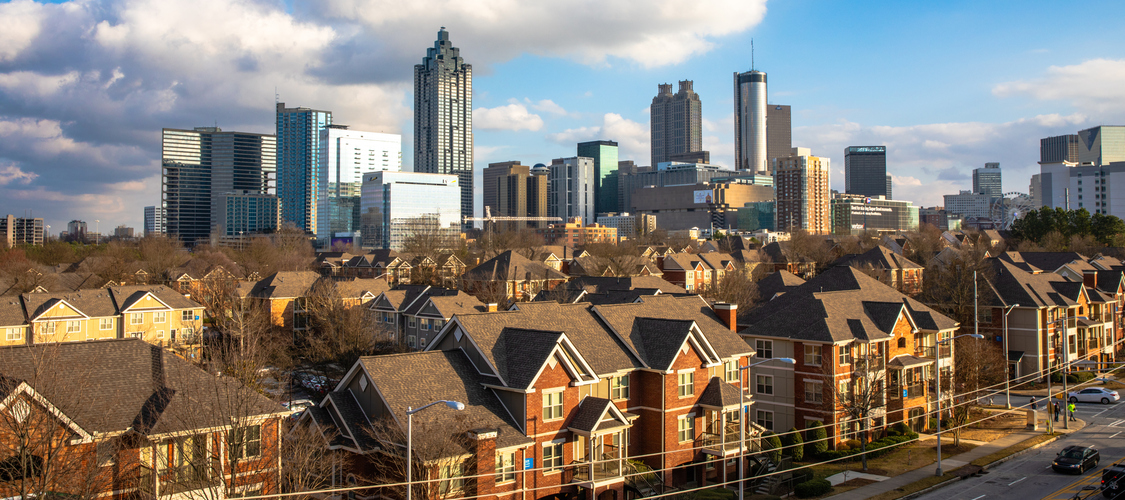
1. Atlanta
A steady flow of homes is giving buyers more options across price points, particularly in suburban areas where new construction has expanded the housing supply.
2. Austin, Texas
One of the pandemic’s biggest boomtowns is now experiencing a reset. More listings and price adjustments are giving buyers a second chance to enter a market that once felt out of reach.
3. Jacksonville, Fla.
Rising housing stock combined with more moderate demand is easing competition, especially for mid-priced homes.
4. Miami
Luxury and second-home markets are cooling slightly, creating more negotiating room for buyers willing to act.
5. Nashville, Tenn.
Housing stock gains are outpacing demand, slowing sales and giving buyers more leverage.
6. Orlando, Fla.
A surge in home listings is giving buyers more choice, particularly in newer developments and suburban communities.
7. Tampa, Fla.
After years of stiff competition, more homes are staying on the market longer, creating opportunities for negotiation.
8. Riverside, Calif.
One of the few Western markets tipping toward homebuyers, with affordability pressures cooling demand and allowing inventory to build.
Author


 Stay one step ahead