

Homeowners
The Most Valuable Home Improvement Tax Deductions for Homeowners
February 25, 2026
With tax season in full swing, savvy homeowners are learning that last year’s home improvements may become this year’s tax breaks.
Certain home improvements related to medical accommodations, home office upgrades, and improving the value of your property may reduce your taxable income. If you’ve made energy-efficient upgrades, you may be eligible for a tax credit.
These write-offs can result in a refund or reduce what you owe Uncle Sam.
So, which home improvements pay off the most when it comes to tax time?
Tax deductions vs. tax credits
Before you get excited about how much money you’ll be able to get back from the Internal Revenue Service (IRS) after you complete your remodel, it’s important to understand the difference between tax deductions and tax credits.
According to the IRS, “a deduction is an amount you subtract from your income when you file so you don’t pay tax on it.” A credit, on the other hand, is subtracted from the amount of tax you owe after you file.
For instance, if you make $100,000 and have a tax deduction of $5,000, your taxable income would be $95,000.
By contrast, if you owe $7,000 in taxes and have a $5,000 tax credit, it would be subtracted from your tax bill, and you would only owe $2,000.
Can you deduct home office upgrades from your taxes?
In some cases, home office upgrades can be deducted if you’re self-employed. However, hybrid and remote workers who are employed by a company or organization aren’t eligible for the deduction.
Often, however, these improvements are recovered over time through depreciation.
If you have a home office, you can also deduct either $5 per square foot of office space or a percentage of your home’s expenses based on the size of the home office. That’s available whether you did upgrades or not.
Medical accommodations may be tax deductible

Some necessary medical accommodations can fall into tax deduction territory. Projects like widening doorways, installing grab bars, or building a ramp to make the home more accessible for someone with a medical condition may count as a tax write-off.
The “deductible portion is often reduced if the improvement increases the home’s value,” said Ruth White, the owner of White Sands Tax Services in Long Beach, Calif.
Capital improvements may lower your tax bill when you sell your home
For a home improvement project to qualify as a capital improvement, it needs to substantially add to the value of the real property and be a permanent improvement. These types of projects can ultimately lower the capital gains taxes you may owe when you sell your home.
Many homeowners won’t owe capital gains tax when they sell. They can generally exclude up to $250,000 in profits if they’re single and $500,000 if they’re married and this was their primary home for at least two of the last five years.
But if your profits exceed the limits, qualifying home improvements can help you to bring your tax bill down. That’s why it’s important to save all the receipts.
Improvements can include things like additions, such as new rooms, garages, or decks; new driveways; new furnaces, central air conditioning, wiring; storm windows and doors; a new roof; insulation; and plumbing projects, among many others.
Homeowners may be able to deduct home equity loan interest
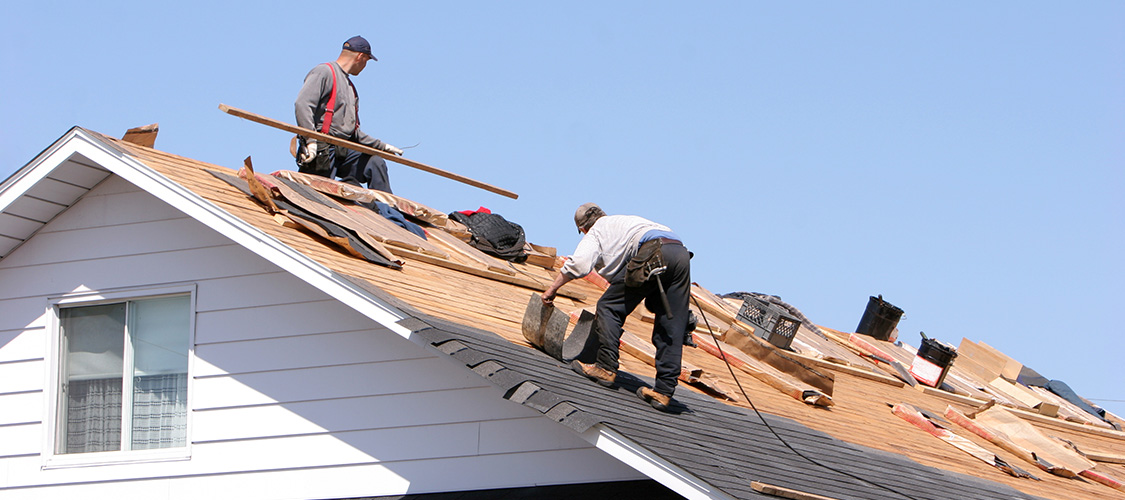
If you take out a home equity loan to pay for home improvements, you may be able to deduct the interest from the loan. This would apply to Home Equity Lines of Credit (HELOCs), cash-out refinances, second mortgages, and certain other loans.
But there is a big catch.
“You must be able to document that the loan proceeds were used only for qualifying improvements,” said White. “And your total itemized deductions must exceed your standard deduction.”
In 2025, qualifying improvements are those that help you buy, build, or substantially improve your home.
In 2026, the interest should be deductible regardless of how the money is used.
Energy-efficient upgrades may provide tax credits
Energy-efficient upgrades are eligible for tax credits, but not tax deductions.
If you completed an energy-efficient upgrade to your home in 2025, such as installing a heat pump, talk to your tax professional about how to claim the credits to reduce what you owe in taxes.
How to claim home improvement tax write-offs
To ensure homeowners can claim every available tax write-off, it’s important to keep all the paperwork. It may help to stash the receipts in a folder.
“Save every invoice and proof of payment and add a brief note about what the project was and why it was done,” said White.
You can also “bundle” standalone repairs into a larger home improvement project. When this happens, White said, “they can sometimes be treated as part of the overall improvement if they add value to the home.”
Figure out which category a project falls under and then organize your records accordingly.
Author




 Smart Moves Start Here.