Idaho DSCR Loan

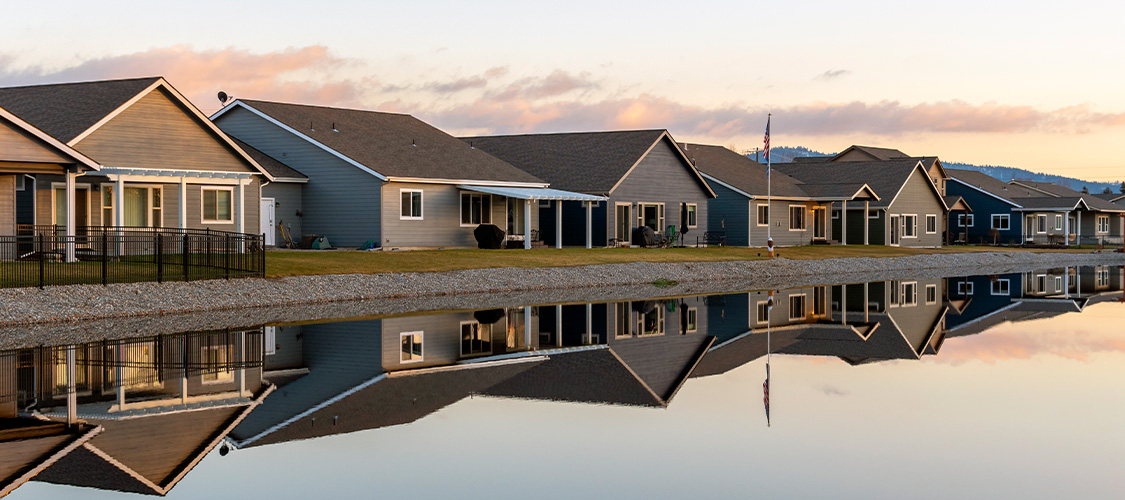
View of city in Idaho.

DSCR Loan Idaho Guide

If you’re an aspiring real estate investor dreaming of building a rental property portfolio, a Debt Service Coverage Ratio (DSCR) loan may be right for you. These loans are designed for investors who see a property’s cash flow potential, but are concerned about providing tax returns, pay stubs, and other income verification requirements.

From expanding Boise suburbs to recreation-driven mountain towns, Idaho offers investors a blend of appreciation potential and steady renter demand. The state’s steady in-migration keeps occupancy rates attractive for long-term landlords. 

What is an Idaho DSCR loan?

DSCR loans are home loans designed specifically for real estate investors. DSCR stands for Debt Service Coverage Ratio, which measures a property’s ability to generate enough income to cover its debt obligations.

Unlike traditional mortgages that focus on the borrower’s personal income, employment history, and tax returns, DSCR loans evaluate the property’s cash flow potential instead.

Since DSCR loans focus on property performance rather than borrower income, approved mortgage lenders can offer investment property financing to a wider variety of borrowers. They can be a good financing option for real estate investors, self-employed individuals, and property portfolio builders.

DSCR loan calculator

A woman working on a computer

The DSCR is calculated using a simple formula:

DSCR = Net Operating Income (Monthly Rent) ÷ Total Debt Service (PITI)

Basically, this means lenders divide the property’s rental income by the total monthly housing payment. This payment includes the principal (loan amount), interest (what you pay to borrow the money), taxes, insurance, and any homeowner association fees (commonly referred to as PITIA).

A DSCR of 1.0 means the property generates exactly enough income to cover its mortgage expenses. In other words, it breaks even.

A DSCR of 1.25 means the property produces 25% more income than is needed to cover the debt, indicating healthy cash flow.

Are you ready to grow your portfolio?

A DSCR loan could be the answer

Idaho DSCR loan benefits

DSCR loans are popular with many real estate investors in Idaho due to their benefits. The mortgages help borrowers with unconventional income or who are self-employed qualify for investment property loans. They also help investors who want to scale their portfolios quickly but are limited by their incomes.

These are some of the benefits offered by DSCR loans:

  • No personal income verification required: The biggest advantage of a DSCR loan is bypassing traditional income requirements. You won’t need to provide tax returns, W-2s, pay stubs, or employment verification. This makes DSCR loans ideal for self-employed investors, business owners with significant write-offs, or anyone with complex income sources.
  • Unlimited real estate portfolio growth: You can finance as many properties as you qualify for based on each property’s cash flow.
  • Faster approval and closing process: Without the need to verify personal income and employment history, DSCR loans typically close much faster than Conventional loans. Most lenders can approve applications within 24 to 48 hours and close deals in as little as five to 30 days. This speed gives you a competitive advantage in Idaho’s fast-moving real estate market.
  • Flexible property types: DSCR loans are available for single-family detached homes, two- to four-unit properties, condos, townhomes, and even short-term vacation rentals. This flexibility allows you to invest in Idaho’s diverse rental markets, from long-term residential rentals in the Boise metro area to vacation properties near mountain and lake destinations. 
  • Higher loan amounts: DSCR loan sizes generally range from $100,000 to $3 million per property. Some lenders will offer even higher amounts. This allows you to acquire premium investment properties in Idaho’s high-value markets.
  • Entity ownership allowed: Many DSCR lenders allow you to close in a Limited Liability Company (LLC) to protect your assets. This is a significant benefit for investors looking to separate personal and business liability.
  • Cash-out refinancing available: You can use DSCR loans to refinance existing investment properties. With a cash-out refinance, you can use your equity in a property to replace your existing loan with a larger one and then pocket the difference. The money you receive can be used for additional investments, renovations, or other business purposes. Cash-out refinances typically allow up to 70% to 75% loan-to-value (LTV) ratios.
  • No debt-to-income (DTI) calculations: Your personal debt-to-income ratio doesn’t matter. This means you may be able to qualify for DSCR loans even if you have significant personal debts or other mortgages.

DSCR loan requirements

Someone reviewing paperwork

There are many different DSCR loan programs available in Idaho. The requirements vary for each loan and lender.

These are some of the general requirements for DSCR loans in Idaho:

  • A credit score of 620 or higher: Most lenders require a minimum credit score of 620 to qualify for a DSCR loan. However, credit score thresholds create pricing tiers for the loans. The higher your score, the lower the mortgage interest rate you may be able to secure. For example, a score of 620-659 typically results in a maximum LTV of 65% to 70% and higher interest rates on your loan.
  • The ability to pay a 20% to 25% down payment: DSCR loans typically require a down payment of 20% to 25% of the property’s purchase price. This corresponds to an LTV of 75% to 80%. Some lenders may accept 15% down in certain circumstances, but 20% is the industry standard. The exact amount depends on your credit score, the property’s DSCR, and the lender’s requirements.
  • Meet minimum DSCR requirements: Most lenders require a DSCR between 1.0 and 1.25. A DSCR of 1.15+ gets you the best pricing and maximum leverage. Standard DSCR approval range is 1.00 to 1.14. Ratios of 0.75 to 0.99 are eligible with pricing or LTV adjustments. If the property has a ratio below 0.75, you may have limited or no eligibility to be approved for a DSCR loan.
  • Cash reserves: Lenders typically require three to 12 months of PITIA (principal, interest, taxes, insurance, and association fees) in reserves post-closing. This is usually six months of savings on average.
  • Eligible property types: Single-family rentals, two- to four-unit residential properties, condos and townhomes (warrantability rules apply), planned unit developments (PUDs), and short-term rentals and vacation properties may be eligible for DSCR loans. The properties must be non-owner-occupied investment properties.
  • Property must pass the appraisal: The property must pass a Federal Housing Administration (FHA)-style appraisal that includes a rent schedule. The appraiser will determine the market rent for the property, which lenders use to calculate the DSCR.
  • Loan must be for an investment property: DSCR loans cannot be used for primary residences or second homes. The property must be a rental investment property that generates income. You cannot live in the property.
  • Minimum loan amount: Most lenders have a minimum loan amount requirement of $100,000 to $150,000. This excludes smaller property acquisitions.
  • Property condition standards: The property must be in habitable, rentable condition. Lenders may have different standards. But generally, the property should not require major repairs that would prevent immediate rental.
  • Title and ownership: Properties can be titled in your personal name or an LLC. Most lenders allow LLC ownership, though personal guarantees may still apply.
  • Loan documentation: While DSCR loans don’t require personal income verification, you’ll still need to provide:
    • Personal identifying information (driver's license, passport)
    • Two months of bank statements showing assets for down payment and reserves
    • Your credit profile and history
    • Property documentation (purchase contract, rent roll, lease agreements if applicable)
    • Entity documents if buying in an LLC (articles of organization, operating agreement)

Let's get your deal funded

A DSCR loan can help you grow your portfolio

How do I qualify for a DSCR loan in Idaho?

To qualify for an Idaho DSCR loan, you must meet the requirements listed above. You need to have a credit score of at least 620 (though 700+ is recommended for the lowest pricing on your loan). Your property must generate enough rental income to achieve the minimum DSCR (typically 1.0 or higher). And you need a 20% to 25% down payment.

There is no personal income requirement, and you won’t need to provide W-2s, tax returns, or pay stubs. However, you must have sufficient liquid assets to cover the down payment and required reserves (typically six months of PITIA).

The property must be an investment property and cannot be your primary residence. The loan amount must fall within the lender’s minimum and maximum loan amount parameters (typically between $100,000 and $3 million).

Your lender will have their own qualification standards and requirements.

How to apply for a DSCR loan in Idaho

A home for rent

To apply for a DSCR loan in Idaho, you must meet the requirements listed above and complete a mortgage application. Applying for a DSCR loan in Idaho is similar to applying for other home loans and generally includes the following steps:

Step 1: Prepare your financial documents - Collect two months of bank statements that show your assets for the down payment and cash reserves and personal identification (driver’s license, passport, Social Security card). If applicable, include entity documents (LLC articles of organization and operating agreement).

Step 2: Check your credit score - Ensure your credit score meets the minimum requirements (620+). If your score is below 700, consider taking steps to improve it before applying. A higher score can help you get a lower mortgage interest rate.

Step 3: Identify your investment property - You will need to have a specific property in mind or under contract. The lender will order an appraisal that includes a rent schedule to determine the property's DSCR.

Step 4: Calculate your DSCR - Before applying, calculate your expected DSCR using the formula: Monthly Rent ÷ Monthly PITIA. This helps you understand if the property will qualify.

Step 5: Submit your application - Complete the lender’s application. Most DSCR lenders have streamlined online applications that may be completed in as little as 10 to 20 minutes.

Step 6: Appraisal and underwriting - The lender will order an appraisal with a rent schedule. The appraisal is the most critical step since it determines both the property value and the rental income used for DSCR calculation. Underwriting typically takes 24 to 48 hours once the appraisal is received.

Step 7: Clear to close - Once approved, you’ll receive a clear to close and can schedule your closing date. Most approved DSCR loans close in 14 to 30 days after you submit an application.

Idaho DSCR loan limits

Unlike FHA loans, DSCR loans are not subject to county-specific conforming loan limits set by the Federal Housing Finance Agency (FHFA.) DSCR lenders are generally portfolio lenders or work with private investors. This allows them to set their own loan amount ranges based on their underwriting criteria.

Most Idaho DSCR lenders offer:

Minimum loan amount: Between $100,000 and $150,000

Maximum loan amount: Between $2 million and $3 million, although some lenders will go higher

Start investing today with a DSCR loan

DSCR loan rates

Interest rates for DSCR loans change over time, just like mortgage rates for all other types of home loans. However, DSCR loan rates are generally half a percentage point to a percentage-point-and-a-half higher than Conventional mortgage rates. Your exact rate will depend on a wide variety of factors including:

  • Credit score: Typically, the higher your credit score, the lower your interest rate
  • Loan-to-Value (LTV) ratio: Higher down payments result in lower LTVs. This can help you secure a lower interest rate
  • DSCR ratio: If you plan to purchase a property with a higher DSCR ratios (1.25+), you may receive a lower interest rate
  • Property type: Different property types may have different interest rates
  • Loan structure: The structure of your loan affects your interest rate. Things like whether you are seeking a fixed-rate or adjustable-rate loan, how long the loan term is, may influence your rate

DSCR loan pros and cons

People doing home improvement

Like all home loans, DSCR loans have pros and cons that are important for investors to consider.

DSCR loan pros

No personal income verification: The biggest advantage of a DSCR loan is you don’t need to provide W-2s, tax returns, pay stubs, or personal income documentation. This is ideal for self-employed investors, business owners with significant tax deductions, or anyone with complex income sources.

Unlimited portfolio scalability: DSCR loans have no caps on the number of properties you can finance. Unlike Conventional loans that limit you to 10 financed properties, you can grow your Idaho rental portfolio indefinitely.

Faster approval and closing: Streamlined underwriting without extensive income verification means loan decisions may be made within 24 to 48 hours. Closings may take place in as little as five to 30 days, a big advantage in Idaho’s competitive real estate market.

No DTI calculations: Your personal debt-to-income ratio is irrelevant when applying for a DSCR loan. You can have multiple mortgages, student loans, or credit card debt, and it won't affect your DSCR loan qualification.

Flexible property types: You may be able to finance single-family homes, duplexes, triplexes, fourplexes, condos, townhomes, and short-term vacation rentals with a DSCR loan. That may make these loans a good option in Idaho’s diverse rental markets.

Entity ownership: You can close in an LLC for asset protection and liability separation with a DSCR loan. Many lenders accept LLC ownership with personal guarantees.

Cash-out refinancing: A DSCR loan allows qualifying borrowers to pull equity from existing investment properties for additional acquisitions, renovations, or to expand their real estate portfolios.

Higher loan amounts: Typical DSCR loan ranges of $100,000 to $3 million may help you to acquire premium properties in Idaho's high-value markets.

Below-market DSCR options: Programs accepting DSCR as low as 0.75 may help you acquire properties in appreciating markets or purchase homes needing minor improvements.

Better for tax strategy: Keep your personal income and investment property income separate with a DSCR loan. This can be advantageous for tax planning.

DSCR loan cons

Higher interest rates: DSCR loans typically have interest rates that are between 0.5 and 1.5 percentage points higher than Conventional mortgages.

Larger down payments: Most DSCR loans require down payments of at least 20% to 25%. This is higher than many other home loans.

Prepayment penalties: Most DSCR loans include prepayment penalties. If you sell or refinance early, you’ll pay significant fees. These are typically five-year step-downs: 5% in the first year; 4% in the second; 3% in the third; 2% in the fourth; and 1% in the fifth. This means that if you prepay in the first year there will be a 5% penalty. Then, it steps down to a 1% prepayment penalty if you sell in your fifth year of the loan.

Higher origination fees: Origination fees for DSCR loans are often higher than other loan types.

Minimum loan amounts: You may not be able to take out smaller DSCR loans as they typically are at least $100,000 to $150,000. This may exclude smaller property acquisitions or markets with more affordable homes.

Stricter property requirements: The property must generate sufficient income to meet minimum DSCR thresholds. Properties in markets with low rent-to-price ratios may not qualify.

Cash reserve requirements: You’ll need three to 12 months of PITIA in reserves post-closing. This potentially ties up capital that could be used elsewhere.

Investment property only: You cannot use DSCR loans for primary residences or second homes. They are only for rental investment properties.

Market dependency: Your ability to qualify depends on rental market conditions. If rents drop or vacancies increase in your market, you may not qualify or may need to accept pricier loan terms.

Limited consumer protections: DSCR loans don’t have the same consumer protection regulations as owner-occupied mortgages.

Appraisal challenges: The appraisal process is critical and can be unpredictable. If the appraised rent comes in lower than expected, your DSCR may not meet requirements.

Idaho DSCR loan FAQs
A home in Idaho

How does an Idaho DSCR loan work?

Idaho DSCR loans work the same way as national DSCR loans. They follow guidelines set by individual lenders or investor programs. Qualification is based on the rental property’s income-generating ability rather than your personal income. The difference in Idaho is the rental demand. The state’s in-migration and tight housing supply can support consistent income potential and help meet DSCR loan qualification.  

What is the minimum credit score for a DSCR loan in Idaho?

The minimum credit score for a DSCR loan is typically 620, though some lenders may go as low as 600 in special circumstances. However, to secure the lowest interest rates and more favorable loan terms, you should aim for a credit score of 700 or higher. Scores of 740+ often receive premium pricing, which can save you money.

How much down payment do I need for an Idaho DSCR loan?

Most DSCR loans require 20% to 25% down. This is the industry standard. Some lenders may offer 15% down for strong borrowers (high credit scores, high DSCR ratios), but this is not common. Plan to have at least a 20% to 25% down payment, plus closing costs and cash reserves.

Can I use a DSCR loan for a short-term vacation rental in Idaho?

Yes, you can use a DSCR loan for a short-term vacation rental. Many DSCR lenders have specific programs for short-term rentals, such as Airbnbs. Given Idaho’s strong rental market, STR programs are particularly robust.

Are there loan limits for DSCR loans in Idaho?

DSCR loans are not subject to the FHFA conforming loan limits that apply to Conventional mortgages. Most DSCR lenders offer loans sizes ranging from a minimum $100,000 to $2 to $3 million or even more. Some specialized lenders go even higher for luxury properties or large multi-family buildings.

Can I buy multiple properties with DSCR loans?

Yes, you can buy multiple properties with DSCR loans. One of the biggest advantages of DSCR loans is unlimited real estate portfolio scalability. DSCR loans are different from more traditional mortgages. Conventional loans allow you to finance only 10 properties. In contrast, you can finance as many properties as you qualify for with DSCR loans. Each property is evaluated independently based on its own DSCR.

Can I close a DSCR loan in an LLC?

Yes, most DSCR lenders allow LLC ownership. This is a significant benefit for asset protection and liability separation. You may need to provide entity documents (articles of organization, operating agreement) and may be required to sign a personal guarantee. But the property title can be in the LLC name.

What if my property doesn’t meet the 1.0 DSCR minimum?

Many lenders offer “below-market” DSCR programs that accept ratios as low as 0.75. These programs typically have higher interest rates and may require larger down payments of at least 25% to 30% of the purchase price of the property. However, these loans can help you buy properties with good potential for appreciation, even if they don’t have the best cash flow yet.

How long does it take to close a DSCR loan in Idaho?

Most approved DSCR loans close within 14 to 30 days after the application is submitted.

Do DSCR loans have prepayment penalties?

Yes, most DSCR loans include prepayment penalties. The most common structure is a 5-year step-down. This step-down structure means that you’ll pay a 5% penalty if you prepay in the first year; 4% in the second year; 3% in the third year; 2% in the fourth year; eventually reaching a 1% penalty if you prepay in the fifth year. After five years, there’s no penalty for paying off your loan early. These penalties are calculated on the outstanding loan balance.

Smart Moves Start Here.Smart Moves Start Here.