


You know the home you want.
We make it happen.
Whether you are looking to purchase a home or upgrade the one you have, it all starts with choosing the right lender and the right home loan.
Welcome to your flexible home loan! Adjustable-Rate mortgages typically offer lower upfront payments. Whether you plan to flip your home or move to a new one in the future, an ARM can support your homeownership journey.
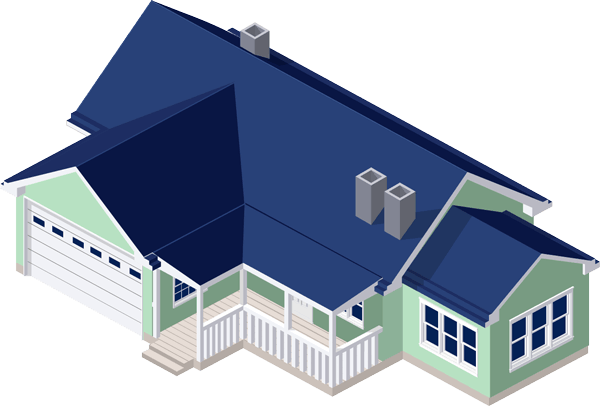


ARMs typically offer lower initial payments.
Lower fixed rate at the start of your ARM.

Interest rate caps that limit how much your interest rate can rise.
If mortgage rates drop, your monthly payments may decrease.
Follow some simple steps to prepare to apply for an Adjustable-Rate mortgage online today

ARMs come in different types so requirements will vary, but generally lenders want to see a credit score of 500-680, a DTI less than 50%, and stable income and employment.


Pre-approval from your lender can give you security while you shop and give you an estimate of your mortgage amount.
Gather your needed documents like identification, income information like W-2s, and credit and debt reports to finalize your application.
If you think an Adjustable-Rate mortgage may be right for your needs, apply today. Or, if you have questions about this, or any of our loan types, talk to one of our loan officers. They’ll be happy to help you on your homeownership journey.

Ask about our Pathway Down Payment Assistance Programs
Licensed in all 50 States + Washington D.C. and Puerto Rico

Easy online application process and borrower portal
To qualify for an Adjustable-Rate mortgage, you typically need a credit score between 500-680 depending on the loan type (Conventional, FHA, etc.), a stable income, and a debt-to-income ratio (DTI) that is less than 50%. Additionally, you must provide documentation of your financial status, such as tax returns and bank statements, and the property must meet the lender's eligibility criteria.
An Adjustable-Rate mortgage (ARM) is a home loan with an interest rate that can change over time. It typically starts with a fixed rate for a set period, such as 5 or 7 years, before adjusting based on market conditions. The adjustments are usually tied to a specific financial index, and there are caps on how much the rate can increase or decrease.
Adjustable rates for ARMs are calculated based on a benchmark index, plus a margin set by the lender. The rate adjusts at predetermined intervals, usually annually, and the new rate is determined by the current index value plus the margin.
The main benefits of an Adjustable-Rate mortgage include lower initial interest rates compared to fixed-rate mortgages, which can make monthly payments more affordable in the short term. Additionally, if interest rates decrease, your payments can also decrease, and ARMs often offer more flexibility in terms of repayment options.
The biggest risks of an ARM include the potential for higher interest rates and monthly payments over time, which can strain your budget. There is also uncertainty about future payments, making it harder to plan long-term, and the possibility of negative amortization if the payment does not cover the interest.
Adjustable-Rate mortgages differ from fixed-rate mortgages in that the interest rate and monthly payments can change over the life of the loan, while fixed-rate mortgages have a consistent rate and payment throughout the loan term. ARMs often start with a lower rate, but they can increase, whereas fixed-rate mortgages provide stability and predictability.
Yes, you can switch your Adjustable-Rate mortgage to a fixed-rate mortgage by refinancing. This involves applying for a new mortgage with a fixed rate and paying off the existing ARM. Refinancing can provide more stable monthly payments but may come with additional fees and closing costs.
Yes, ARMs have rate caps that limit how much the interest rate can increase over the life of the loan and at each adjustment period. These caps provide a level of protection against dramatic rate increases, helping to manage the risk of higher payments.
Some Adjustable-Rate mortgages may have prepayment penalties, which are fees charged if you pay off the loan early. However, many lenders do not impose these penalties, so it’s important to review the terms of your specific ARM to understand any potential costs.
The loan limits for ARMs vary depending on the lender and the specific program. Generally, they follow the same limits as Conventional Fixed-Rate mortgages, which are set by Fannie Mae and Freddie Mac. These limits can change annually and are higher in certain high-cost areas.
Discover valuable information to help you navigate the world of Adjustable-Rate mortgages. From understanding the benefits to navigating the different types, our articles cover it all.
Whether you are looking to purchase a home or upgrade the one you have, it all starts with choosing the right lender and the right home loan.

Use our mortgage and refinance calculators to help you plan your future today

With more than 427,100+ reviews online, you don't have to just take our word for it. From first-time homebuyers, to veterans, to seasoned investors, NAF is commited to serving our customers on whatever homebuying path they choose.
 Stay one step ahead