Housing News
5 Fall Home Design Trends You’ll Want This Season
September 17, 2026
After years of highly polished, neutral interiors, homeowners in 2026 are embracing spaces that feel more personal, comfortable, and adaptable as their lives change.
Warm colors, vintage pieces, expressive natural materials, and finishes that improve with age are among the trends shaping homes this fall, according to the 2026 U.S. Houzz Fall Design Trends Report. Houzz interviewed nearly 50 home design professionals to come up with the list.
Homeowners with equity in their properties may be able to tap into it through a home equity loan to fund renovations.
“I’ve been designing kitchens and baths, remodeling and building homes for over three decades, and one thing hasn’t changed: people invest in their homes at every stage of life,” said Eric Goranson, an interior designer and host of the Around the House Show.
Whether homeowners have a large renovation budget or $50 for a weekend project, Goranson said they share a common goal: “Everyone wants their space to work better and feel like theirs.”
Here are five of the biggest home design trends for fall 2026 and how homeowners can bring them home.
1. Warmer colors are moving in this autumn
The cool grays and stark whites that dominated interiors for years are giving way to richer colors and warmer neutrals.
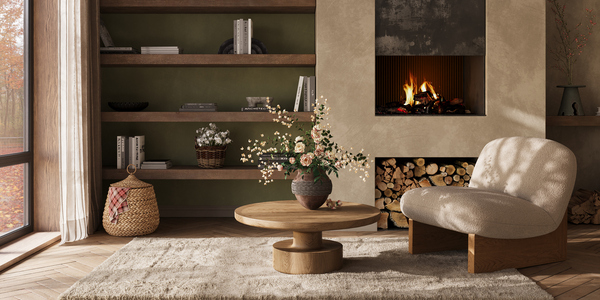
Houzz professionals report that homeowners are layering wood tones, earthy colors, textures, and natural materials to add depth to rooms.
“My clients are seeking ‘warm neutral’ color palettes for their renovation projects and new builds,” said Wendy Glaister, founder and principal designer of Wendy Glaister Interiors in Modesto, Calif. “I’m seeing a strong shift toward cream, brown, rust, deep sage green, and burgundy.”
The shift extends beyond paint. Glaister is specifying marble in gold, brown, green, and burgundy tones, while remodeler Kevin Kuopus of the Twin Cities’ J. Carsten Remodeling is seeing requests for walnut kitchen islands, brushed-brass hardware, and terracotta and zellige (textured) tile.
Get the look: Start with color. Painting a room or even an accent wall in a creamy neutral, sage, rust, or clay tone can change its feel without a major investment. Existing kitchens can get a smaller update with new hardware, lighting, or wood accents.
2. Collected interiors are replacing the showroom look
Perfectly coordinated rooms are giving way to interiors that look like they came together over time.
Goranson has had clients ask him to design around a grandmother’s dresser or old dining table rather than replace it.
“Clients are asking to see themselves in their homes like never before,” said Glaister.
That can mean displaying books, family photographs, artwork, and travel mementos instead of trying to achieve perfect symmetry.
Get the look: Shop your own home first. An inherited piece of furniture, family photograph, or travel find can become a focal point. Wallpapering the back of a bookcase is another small project that can add pattern and depth.
3. Imperfection is adding character
Homeowners are increasingly embracing materials that show their age.
Houzz professionals report interest in handcrafted tile, artisan plaster, natural stone, aged metals, vintage pieces, and original architectural details.
Goranson is seeing clients choose hand-scraped hardwood, honed stone, and brass that is allowed to develop a patina.
“A flawless finish used to be the selling point,” said Goranson. “Now it’s the thing that makes a room feel unlived-in.”
Get the look: Consider vintage lighting, aged brass, older wood furniture, handmade tile, or an asymmetrical gallery wall to add character without remodeling an entire room.
4. Natural materials are becoming statement pieces
Designers are using wood and stone in more expressive ways, including natural stone sinks, furniture, and lighting.
Glaister said clients are also choosing different stones throughout a home rather than repeating a single material. Stained cabinetry lets the wood’s natural grain become part of the design.
Kuopus is seeing requests for integrated stone sinks, travertine island edges, and fluted wood wall paneling.
Get the look: Pick one natural material as a focal point. Wood shelves, a stone-topped table, a woven rug, or a small area of handmade tile can add texture on a smaller budget.
5. Homes are being designed to change with their owners
Homeowners are increasingly considering what they may need from their homes years from now.
About 61% of homeowners plan to stay in their homes for at least 11 years following a renovation, according to the Houzz study. Roughly 44% described their residence as a forever home.
Goranson is seeing wider doorways, curbless showers with non-slip tile, microwave drawers installed at counter height, and grab bars integrated into bathroom designs before they are needed.
“Nobody wants to gut a kitchen or bathroom every ten years,” said Goranson. “They want it to bend instead of break when life changes.”
Get the look: Think ahead when renovating. A home office that can become a guest room, an easier-to-reach appliance, or a curbless shower can make a home more flexible for the future.
How to pay for a larger home renovation
Smaller updates may fit into a household budget, while a new kitchen, bathroom, or larger renovation can require financing.
Homeowners with sufficient equity may consider a Home Equity Line of Credit (HELOC), which provides a revolving line of credit they can tap as renovation bills arise.
A second mortgage, such as a home equity loan, can provide a lump sum while leaving the first mortgage in place. A cash-out refinance replaces the existing mortgage with a larger loan, giving the homeowner the difference in cash.
The right option depends on factors such as available equity, project cost, the existing mortgage, and what the homeowner can comfortably afford to repay.
Author



 Stay one step ahead