What is down payment assistance in New York?
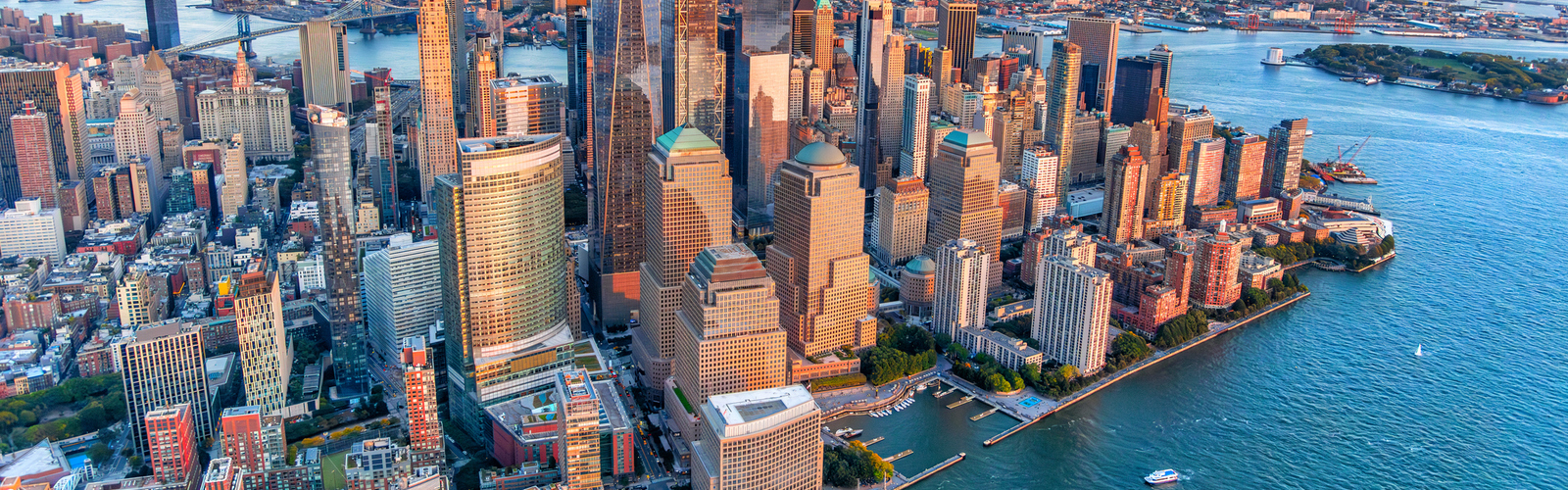
New York’s home prices can seem daunting, from Manhattan’s skyline to the Hudson Valley’s small towns, but the right down payment assistance can bring homeownership closer than the price tags suggest.
Homebuyers may be able to use down payment assistance (DPA) programs to help them purchase a property. Down payment assistance is made up of national, state, local, and employer-sponsored programs designed to support homebuyers who can afford a monthly mortgage payment but need help coming up with the upfront cash needed for a down payment and closing costs.
Offered by government agencies, nonprofits, and some private organizations, DPA provides financial support to help homebuyers cover the down payment, closing costs, or both. It helps to bridge the gap between what buyers have saved and the funding they need to buy.
It may also provide homebuyers with a financial cushion, so they don’t have to drain all of their savings to afford homeownership.
From the skyscrapers of Manhattan to the vineyards of the Finger Lakes, New York homebuyers can tap into statewide, local, and community-based programs that help cover the upfront costs of purchasing a home.
Assistance typically comes in one of three forms: a grant (money you don’t repay), a forgivable loan (which is gradually forgiven the longer you stay in the home), or a low-interest loan. The right option depends on the program and your individual situation.
Whether you’re a first-time homebuyer in New York or returning to homeownership after years away, there may be money available to help make up the difference between how much you’ve saved and the amount you need to close on a home.
How does down payment assistance work?
Every down payment assistance program has its own rules, but most follow a similar path from homebuyers researching their options to funding.
Research. The DPA landscape is larger than most people realize. In fact, there were more than 2,700 DPA programs as of July 2026, according to Down Payment Resource, a company that connects homebuyers to the programs. Assistance may be available at the state, county, city, or employer level, and different programs have different eligibility requirements. If one program doesn’t fit your situation, keep looking. There may be others that will.
Determine your eligibility. Common requirements include income limits, minimum credit scores, and property location restrictions. Understanding your financial profile, where you want to buy, and how long you plan to live in the home will help you identify which programs are worth pursuing.
Apply. Once you find a down payment program that fits your criteria and eligibility, you’ll submit an application and supporting documents. Expect to provide proof of income, personal identification, credit information, and details about the property you intend to purchase.
Get approved and receive funding. If your application is approved and your information verified, you’ll receive the assistance at closing. It’s typically applied directly toward your down payment, closing costs, or both, depending on the program’s terms.
It is important to note that most DPA programs have their own conditions, which may include having to repay the loan in part or full if you move early, sell, or refinance the home. Make sure to always review and understand the terms and conditions of any loan you use.
Additionally, some programs may run out of funding. That’s why it’s important to check availability and stay on top of deadlines.
Who qualifies for down payment assistance?

Many people don’t realize they may be able to qualify for down payment assistance. DPA isn’t just a tool for first-time and first-generation homebuyers or those with lower incomes.
The assistance is available for a wide variety of people in a range of financial situations. Nearly two-thirds, 62%, of current DPA programs serve homebuyers earning more than $100,000 a year and 11% have no income limits, according to Down Payment Resource.
Additionally, more than a third, 38%, of DPA programs don’t have a first-time homebuyer requirement.
There are DPA programs for: First-generation homebuyers, Native American homebuyers, veterans, educators, law enforcement, first responders, municipal employees, those who earn less than a certain threshold, and more. Some programs also exist for buyers who purchase properties in certain communities.
Some organizations also offer homeownership assistance programs for their employees, so make sure you check with your employer as well.
Types of down payment assistance
The majority of DPA programs fall into two categories: Second mortgages and grants.
Second mortgages are by far the most common form of down payment assistance, making up 56% of all programs, according to Down Payment Resource. This is a separate loan running alongside your primary mortgage, with its own monthly payment.
Second mortgages are often set up to be a deferred or forgivable loan to reduce the upfront cost. If you have a deferred loan, it means that it doesn’t have to be repaid until you sell, refinance, or move out. A forgivable loan is gradually forgiven if you live in the home for a set amount of time.
Grants make up 9% of DPA programs and are the most straightforward form of assistance. They’re a gift, with no repayment required under any circumstances. As always, read the terms carefully to make sure you understand any conditions attached.

Finding down payment assistance
Down Payment Resource offers an interactive search feature that allows you to search available DPA programs by location as well as by things like your occupation, military status, or disability status.
New American Funding (NAF) also offers a down payment assistance program called Pathway to Homeownership. Specifically available to first-time homebuyers, eligible borrowers may receive up to $6,000* in financial assistance. This money can be used to help with your down payment, closing costs, or other costs. It can also be combined with other DPA programs.
National down payment assistance programs

While there is not national database of nation-wide DPA programs available, there are several main ones that are notable. They include:
The Chenoa Fund
The Chenoa Fund is administered by CBC Mortgage Agency (a federally chartered tribal housing finance authority). It is one of the most accessible national DPA programs available because it drops two of the most common barriers to qualification. It has no income limits and no first-time homebuyer requirement.
The program covers the required 3.5% down payment on Federal Housing Administration (FHA) loans. The aid is structured either as a forgivable second mortgage or a repayable second mortgage, depending on the option selected.
Borrowers need a minimum 600 credit score to qualify. The program is available in all states except New York.
Since it works through a network of participating lenders nationwide, buyers can access it through their mortgage lender rather than applying directly.
The National Homebuyers Fund
The National Homebuyers Fund (NHF) is a nonprofit organization that provides down payment and closing cost assistance of up to 5% of the loan amount. It’s administered as a grant, meaning no repayment is required.
It has no first-time homebuyer requirement, making it available to repeat buyers who may not qualify for programs with that restriction. It works with FHA, U.S. Department of Veterans Affairs (VA), U.S. Department of Agriculture (USDA), and Conventional loans.
The credit score and debt-to-income requirements are flexible.
The NHF is available in most states and is accessed through a network of participating lenders rather than through a direct application to the fund itself.
Many of the national DPA programs are offered by various lenders and private non-profit organizations like the Homeownership Council of America.
Down payment assistance programs in New York
The State of New York Mortgage Agency (SONYMA) is the state’s housing finance agency and the central source for statewide DPA programs. SONYMA doesn’t lend directly to buyers. Homebuyers apply through an SONYMA-approved participating lender who will combine the assistance with the mortgage.
SONYMA Achieving the Dream Program
The Achieving the Dream program provides low interest rate mortgage financing with a minimal down payment required. The mortgage can be combined with 3% down payment assistance.
Program requirements include the following:
- Must be a first-time homebuyer
- Must occupy the property as your primary residence
- Must meet regional income limits, which vary by county
- The property must be located in New York State
- Sales price and appraised value cannot exceed SONYMA’s income limits
- Homebuyer must complete a homeowner education course
- Funds are limited and available on a first-come, first-served basis
SONYMA’s Down Payment Assistance Loan (DPAL)
The Down Payment Assistance Loan offers 3% of the purchase price, up to $15,000, or $3,000, whichever is higher. The assistance is available to eligible homebuyers using a SONYMA mortgage program and is structured as a 0% interest 10-year loan that is forgiven after 10 years and requires no monthly payments. Repayment is required if the home is sold or refinanced.
Program details include:
- If required to carry mortgage insurance, DPAL can be used to cover all or a portion of your premium
- DPAL loan cannot exceed your actual down payment and/or closing costs
- Interest rates for first-time mortgages with a DPAL attached will be 0.4% higher
- Amount subject to repayment will decrease 1/120 per month, each month you live in the property
- Minimum cash contribution of 1% of the value of the property
SONYMA is also launching a limited, enhanced DPA loan called DPAL Plus 2026. This program provides up to $30,000 in down payment and closing costs assistance. The exact amount of the 0% interest second mortgage loan depends on the buyer’s closing costs, purchase price, other available subsidies, and the amount needed to reduce the first mortgage to 80% of the home’s value.
Program details include:
- Maximum household income of 60% of area median income (AMI.) This is the midpoint of local earnings for an area, calculated by the U.S. Department of Housing and Urban Development.
- The loan is forgiven in equal monthly installments over the first 10 years of borrower occupancy
- Must be first-time homebuyer
- Maximum purchase price limit of $500,000
- Must complete homebuyer education course
SONYMA’s Repayable Second Lien (RSL)
The Repayable Second Lien (RSL) offers up to 5% of the net purchase price for down payment, closing costs assistance, and single premium mortgage insurance. The 0% interest second lien is due when the primary mortgage is paid off or satisfied and does not require monthly payments.
Program details include:
- Must be first-time homebuyer
- Must meet SONYMA purchase price limits
- Applicant income must be within either the Achieve the Dream or Low Interest Rate program limits
- Must complete homebuyer education course
- Owner occupancy is required
Beyond SONYMA’s statewide programs, several New York cities and counties have established their own DPA programs. Many of these can be stacked with SONYMA assistance. That means some eligible buyers may be able to combine multiple programs and significantly increase their total help.
This can help them to cover their down payment, closing costs, or simply have a little left over as a financial cushion.
New York City down payment assistance program
New York City spans five distinct boroughs — Manhattan, Brooklyn, Queens, the Bronx, and Staten Island — each with its own character, from Manhattan's iconic skyline to Brooklyn’s brownstones and Queens’ diverse food scene. As the country’s largest city, it offers buyers an unmatched mix of culture, career opportunities, and neighborhood variety, even as they navigate some of the priciest real estate in the nation.
New York City down payment assistance program includes:
HomeFirst Down Payment Assistance Program: This program provides 20% of the total purchase price up to $100,000 to eligible first-time homebuyers for use toward down payment and closing costs assistance. The assistance is structured as a 0% interest forgivable loan with no monthly payments required.
Program details include:
- Must be first-time homebuyer
- Completion of a homeownership education course
- Must contribute a minimum down payment or contract deposit of at least 3%
- Must pass a Housing Quality Standards inspection
- Have a maximum household income of up to 120% AMI
- Meet maximum purchase price limits based on county
- Must live in the home for at least:
- 10 years if the loan is less than or equal to $40,000
- 15 years if the loan is greater than $40,000
- Loan must be repaid if the home is sold, transferred, refinanced, or no longer the primary residence during the required occupancy period
Westchester County down payment assistance programs
Westchester County sits just north of New York City, offering leafy suburbs, historic river towns, and easy commuter rail access into Manhattan. Home to communities like Yonkers, White Plains, and Scarsdale, it gives buyers more space and top-rated schools while staying within reach of the city’s job market. (Counties like this are typically part of a larger metropolitan area — in this case, Greater New York City.)
Westchester County down payment assistance programs include:
The Westchester Residential Opportunities (WRO) offers the First Home Club, which provides a 3-to-1 match to help build savings for a down payment and closing costs. Members can qualify for matching funds of up to $5,000 from a participating bank.
Program requirements include:
- Must complete homebuyer education counseling
- Participants must save $1,667 to receive the full $5,000 grant, which will then be added to the deposit
- Buyers must remain in the program for at least 10 months
- Buyers must attend a financial literacy educational class to learn about the homebuying process
The Westchester County Home Ownership Initiative offers $25,000 to income-eligible first-time homebuyers purchasing a home within Westchester County.
Program details include:
- Gross household income must be at or below 80% of AMI
- Owner must occupy the home to keep the assistance
- Repayment is required if the property is sold, or violates the mortgage terms
The Hudson Valley Home Ownership and Revitalization offers $25,000 to income-eligible first-time homebuyers purchasing a home in Westchester or the Hudson Valley. The assistance is offered as a forgivable loan, which requires repayment if the loan recipient does not occupy the property for 10 years.
Program details include:
- Minimum of 51% of the $25,000 must be used for renovation of the property
- Household income limits are 80% of AMI for the area in which you choose to purchase
Buffalo down payment assistance program
Buffalo sits along Lake Erie in western New York, known for its revitalized waterfront, and some of the most affordable home prices among major U.S. cities. Steady growth, paired with historic architecture and strong neighborhood pride, makes it a good choice for buyers wanting city character without the city-sized cost.
Buffalo down payment assistance program includes:
Down Payment Closing Cost Assistance (DPCC): This program, administered by the University District Community Development Association, provides $15,000 to eligible first-time homebuyers for use as down payment and closing costs assistance. The funds are provided as a 0% interest, deferred payment loan. If the buyer lives in the home for the full five-year term, the loan will be forgiven, and no repayment is required.
Program details include:
- Property must be located within the legal limits of the city of Buffalo
- Home must be occupied by buyer
- Household income limits must fall between 50% and 80% of HUD Income Guidelines
- Must qualify for a mortgage loan with an approved financial institution
- Funds must be repaid if the home is sold, or no longer the buyer’s primary residence with five years of purchase
- Must be first-time homebuyer
- Completion of a homeownership education course
These are some of the main down payment assistance programs available across New York. However, there may be more programs available to you based on your location in the state or your occupation.
For instance, some towns or cities may offer down payment assistance specifically for first responders or teachers. Make sure to do your own research to see if there is a program that may be right for you. And be aware that certain programs may only be available until all of the funding is used.
How to apply for New York down payment assistance

The application process for different DPA programs may change. However, some general application steps include:
- Check your eligibility. Review income limits, credit requirements, and first-time buyer status at hcr.ny.gov/sonyma. For local programs, contact the relevant city or county housing office.
- Find a participating lender. SONYMA programs are only available through approved lenders in their network.
- Get pre-qualified. Your lender reviews your income, credit, and debts to determine which programs you may qualify for to receive funding.
- Complete homebuyer education. Enroll in an approved homebuyer education course and keep your completion certificate for closing.
- Find your home. Work with a licensed agent to locate a qualifying New York property. Your lender will confirm if it meets program requirements.
- Close on your home. Your lender packages your first mortgage and DPA together. Assistance funds are applied at settlement.
New York down payment assistance FAQs
Do I have to be a first-time homebuyer to qualify?
You do not always have to be a first-time homebuyer to qualify for down payment assistance in New York. However, certain programs are limited to first-time homebuyers, so make sure to check each program’s qualifications.
How much down payment assistance can I get in New York?
Through SONYMA programs alone, you can receive up to $15,000 or 3% of the purchase price. By layering local city or county programs on top, eligible buyers in markets like New York City or Westchester County can access significantly more.
Is down payment assistance a grant or a loan?
It depends on the program. SONYMA’s DPAL is a 10-year forgivable second mortgage that must be repaid if occupancy requirements aren’t met. Other programs may be grants that don’t have to be repaid. Always confirm the structure before applying.
Can I use down payment assistance with a VA or USDA loan?
No. SONYMA’s DPA products must be used with SONYMA first mortgage loan through a participating lender.
What credit score do I need?
Credit requirements for SONYMA DPA are dependent on the SONYMA first mortgage used with the assistance. For example, the SONYMA FHA Plus requires a minimum 600 FICO score, while the SONYMA Conventional Plus requires a minimum 620 FICO score. If your score is below that, speak with a SONYMA-approved lender about steps to improve it. Other programs will have their own credit requirements.
Do I need to take a homebuyer education course?
Yes. All SONYMA programs require it, and most local city programs do too. Courses are generally available online and take a few hours to complete at your own pace.
Can multiple DPA programs be combined?
Often, yes. Many SONYMA and local programs draw from different funding sources, which allows them to be layered. A skilled loan officer is essential for identifying stacking opportunities and packaging them correctly. Always confirm layering eligibility with your lender before assuming programs can be combined.
Program details reflect August 2026 information. Down payment assistance programs are subject to change and depend on current funding availability. Always confirm income limits, eligibility requirements, and program details with your lender or the applicable program administrator before applying.
*Credit up to $6,000 maximum. Due to maximum seller concession rules applicable to purchase loan transactions, this credit could be less than $6,000 in some cases where other concessions have been made to the consumer.
 Stay one step ahead